A quick glance at my bookcase(s) should tell you that I'm no stranger to either the doorstopper or the epic series. So when I start a review talking about a book's length, you need to bear in mind that I got A Dance With Dragons in hardback on release day, read The Stand in under a fortnight, am in the process of re-reading Robin Hobb's Realm of the Elderlings series, and in general don't mind a good long read.
Connie Willis's Blackout/All Clear is certainly a long read. It's one of few novels I've read that's had to be split into two heft volumes, such is its length - 1,400 pages of time travelling, the Blitz, and agonising over whether the course of history has been changed.
For such is its premise. A group of historians are sent to England in 1940 on separate assignments from the time travelling labs at the University of Oxford in 2060. Once there, they find they can't get back home. The greatest worry of the protagonists - Polly, Eileen, and Mike, to use their 1940s cover names - is that they might do something that cost the Allies the War through their actions in the Blitz.
If that sounds like it isn't enough to fill a 1,400 page novel, you'd probably be right. There's a large incidental cast of characters, and the plot isn't quite as simple as it sounds from above (more of that later), but my main complaint does come down to the fact that there's about 400 pages of filler over the two volumes. Willis would no doubt argue that her world-building (which is excellent) and character development (which is less so) justifies the length, and she'd have a fair argument. What could be argued on the other hand is that she'd done so much research that she felt obliged to include it, hence the dragging middle section.
For that criticism, however, it does have to be said that the research is put to good effect. Although much of it fails to advance the action, it lends an authentic feel to events. Constant references to real bombings slipped in to speech remind the reader that the Blitz is a real and present danger in 1940, and the day-to-day lives of Londoners in the Blitz are faithfully represented in the shelters and the department stores where the protagonists sleep and work. However, it's as if Willis felt every aspect of her research had to be represented, hence long sections where little happens but characters point out things that were bombed in the middle of repetitive conversations about how they'll return to Oxford, or make side-journeys that serve only to bog down the pace.
But when the action does advance, it can be exhilarating. There's a section surrounding 29th December 1940, the night the fire watch saved St Paul's Cathedral, which is tense and fraught and genuinely exciting. Multiple plot threads come together and are expertly handled in a brilliant sequence which takes place while bombs hit London and characters are forced away from their introspection and into decisive action.
And, of course, there's the plotting. Connie Willis needs congratulating on her handling of a dozen intricate plot-threads. Some twists can be seen coming from a mile off, it has to be admitted, but when everything comes together it can be seen how well the novel works as a unit. Time travel as a plot device does give a writer licence to obfuscate and then reveal, and if done badly it can be painful to read, but Willis does it quite beautifully.
Blackout/All Clear is too long by some distance. But when it gets things right, which is more often than not, it proves to be an excellent read. As the winner of the Hugo for best novel in 2011, I was expecting a good read, and so it proved to be. It's difficult to think of too many books I've read this year that either equal or better it. And to quote a great man, you'll like it if you're into the wibbly wobbley timey wimey... stuff.
Showing posts with label reading. Show all posts
Saturday, 22 December 2012
Saturday, 14 January 2012
Son of Heaven (Chung Kuo Recast 1)

It may be that I come to regret these words, but I don't think I'll be racing back to David Wingrove's Chung Kuo Recast series to devour the next volume as a matter of any urgency. There is, of course, every chance that I'll pick up Daylight on Iron Mountain at some point in the future, but it's not on my essential reads list.
To be fair, Son of Heaven wasn't on my essential reads list either. I was aware of it after it got a good write-up in Interzone, but I already had a dozen books to be getting on with (including the peerless The Windup Girl). But it was only when it became available as Amazon's daily Kindle deal that I felt compelled to splash out the princely sum of 99p for the privilege of having it sit unread on my Kindle for the best part of six months.
Son of Heaven is the first volume of the recast series. Chung Kuo was first released as an eight-book series in the late 80s and into the 90s. I've never read it, but as I understand it it gained a strong following as it told its tale of the rise of China in the future. David Wingrove took the decision to rewrite it as a 20-book series (do you see one reason why I'm a bit reluctant to get stuck in to the whole series?), and Son of Heaven appeared in the middle of 2011.
Set in a post-apocalyptic Dorset village for the most part, Son of Heaven follows Jake Reed and his family and friends. We find out the nature of the catastrophe that has seen a return to almost-feudal times in the Western world, and follow the day-to-day existence of the village for the rest of the time. I have a bit of a problem with this, or, more specifically, with the way it's structured. I don't have a problem with flashbacks and telling the backstory (as the apocalypse itself is told), but I do have a problem when it results in a complete change of pace and focus. It would have been better, in my opinion, to have somehow interspersed the apocalypse with the main narrative, keeping the pacing going and not rendering the idling early scenes almost irrelevant.
Being quite honest, there are around 100 pages that could have done with cutting or restructuring. It may be my own personal taste, but it felt like nothing happened for the opening third of the book only to be plunged into the flashbacks where it was all action. Looked at as a whole, the structure just about works, providing ample prelude to what eventually comes about in the end. But it could be improved so it doesn't feel like reading it is a drag. When things do happen they feel nastily out of place.
Wingrove is actually a pretty good writer. His style is brisk and readable. I just found myself annoyed by the amount of profanity he used. Seldom did a page go by without a 'fuck' or some other strong profanity. I get it, strong language is realistic, but did he have to make it so noticeable? Another issue with his writing I had was his almost-embarrassed handling of sex scenes. I'm confident I could write several better than at least one of them in Son of Heaven (and there are a few, let me tell you). 'Her hands cupped his sex' is about as good as it gets. And then there were the unintentionally hilarious moments ('the odious Wang' being my personal favourite).
So it's fair to say I didn't enjoy Son of Heaven as much as I would have liked. It had its moments, but to me they felt like they were few and far between. If I see the next volume going cheap, I might pick it up because it did feel, towards the end, like there was real promise in Chung Kuo Recast. The premise of a rising China is in itself interesting and relevant. I just wish there hadn't been so much mucking about at first.
Labels:
Chung Kuo,
novel,
reading,
review,
Son of Heaven
Friday, 23 September 2011
The Ghost Brigades

Why did it take me so long to get round to reading The Ghost Brigades? Old Man's War was as good a military SF novel as I've ever read (even including The Forever War, but that stands apart on different grounds), with engaging characters, an interesting story and a well-realised universe.
On this evidence, John Scalzi could write the handbook on writing accessible, engaging, compelling SF in the twenty-first century. The Ghost Brigades continues on where Old Man's War left off, both in terms of the story and stylistically. Scalzi doesn't overcomplicate his language, and some would criticise him for perhaps not stretching his abilities as he should... but why would he do that when he writes crisp, clear English with just the right amount of quirk as it is? True, he's not going to win awards for use of poetic language, but it works just fine as it is, thank you very much. The result is that a casual reader would do well to pick up Scalzi's work as a gateway to modern SF.
Old Man's War introduced humanity's colonies, the CDF, and the ghost brigades themselves. I'm not going to go into too much depth about them - read the book to find out more (and you'll enjoy it, believe me). And now the world is nicely fleshed out we can progress deeper into its depths. Relatively speaking, Old Man's War was a simple tale of a man going to war; The Ghost Brigades goes several steps further, with a far more complex story, which also offers the humanity we've come to expect from Scalzi.
We have a traitor who has left his consciousness behind. In an attempt to get to the bottom of his treachery, Special Forces try to transfer the consciousness into a Special Forces soldier. It doesn't take, and so Jared Dirac (that's his name) ends up in the ghost brigades, fighting to defend humanity's interests in space.
What Scalzi does particularly well is create characters who at one level have to be identical, but on another, completely different, level need to be individuals, suited to different roles in the narrative. There is one character who comes into the book already well established in-universe, and Scalzi keeps her character consistent with what went before, but he creates another half-dozen or so well-drawn characters. Even those he doesn't go into depth with are left with distinct personality traits which mark them out as different.
It's possible to connect with those characters because they are well-written and distinct individuals. Moments that shock the characters are felt by the reader (well, by this reader, at least), and every triumph and defeat is met by an emotional response.
At its heart, The Ghost Brigades is a good old-fashioned adventure story set in space. In many ways it's what the Star Wars prequel trilogy should have been if it was literature and not a set of undercooked films with too many special effects. And I don't think I can pay it a higher compliment than that.
Labels:
book,
John Scalzi,
Old Man's War,
reading,
review,
sf,
space opera,
The Ghost Brigades
Tuesday, 6 September 2011
Slaughterhouse-Five
Slaughterhouse-Five is a funny book. In many ways it was not enjoyable. It was stark, bleak, depressing. The style in which it was written was no-nonsense, straight to the point. It was jumpy and inconsistent. And yet, despite all that, despite my own feelings of disgust at the blasé way things were depicted, I could feel its ideas influencing me.Of course, all the above is deliberate on the part of the author. It's a semi-autobiographical work with features of science fiction, set around the bombing of Dresden in February 1945. Those events, at least, happened. As did the capture of Kurt Vonnegut at the Battle of the Bulge, and many of the events described at the concentration camp. It's impossible to write a book around those events which doesn't inspire feelings of disgust. And it's meant to - it's meant to show the author's disgust with war.
Fundamentally, Slaughterhouse-Five is an anti-war novel. It runs deeper than that, however, analysing the illogical and irrational nature of the human race. It adopts the life of one Billy Pilgrim (supposedly a campmate of Vonnegut in his POW days) as a vessel through which to tell its story and get its point across. Through a temporal anomaly as a result of kidnap by aliens, his life unfolds in a non-linear fashion. One second he's in the concentration camp, the next he's on honeymoon with his wife, or an exhibit on an alien world.
The way the narrative jumps about is jarring. It's unconventional. And in the context of the themes the book tries to get across, it works. I'll admit to getting frustrated by the constant scene breaks (as a fan of a flowing narrative, without scene breaks apart from where strictly necessary), but otherwise the structure is well-suited to the story.
Some things in the book do stick with me. What was written on Montana Wildhack's locket, for instance (and its thematic significance), or the description of the bombed Dresden as being like the moon. But admiring a book is different from liking it. It was a gripping read, one which affected me, but I couldn't bring myself to like it in the slightest.
And for Kindle owners - I got my copy on the Kindle for £2.86. If you want to get it and read it at that price, it's more than worth it.
Labels:
book,
classics,
Kurt Vonnegut,
novel,
reading,
review,
science fiction,
sf,
Slaughterhouse-Five
Monday, 20 June 2011
Summer reading
It's the same, day in, day out. Wake up on a morning, browse the Job Centre website for jobs, apply for two or more, make lunch, and then have an afternoon to myself. It's starting to get boring already. Fortunately, there is a saving grace in this dull routine, and that's time to engage in my summer reading.
It seems to be a very British thing. The summer read is something that (perhaps thanks to Richard and Judy) has become a part of British holiday and summer society. People who don't touch books all year suddenly pick up the latest bestseller (generally something by Dan Brown or Jodi Picoult) to read either on the beach or in the park. Those who generally do read far more mark out certain books that they want to read. As I'm part of the latter group, I've bookmarked five books I want to read this summer.
5. War and Peace (Leo Tolstoy)
There's always a classic on the to-read list, and this year it's probably the biggest of the lot. Last year, Crime and Punishment had me in the garden soaking up the rays while I read about deepest, darkest Russian winters with destitute students (that sounds familiar) and sordid murders. It was all right - not my cup of tea, but it was bearable enough. I also had a shot at Pride and Prejudice and hated it. But I'm now at an age where I may as well at least have a go at reading Tolstoy's epic, as much to say I have read it as much as anything. Plus, it was only about 70p on the Kindle.
4. Helliconia (Brian Aldiss)
It's another not-short book. This time, it's the omnibus edition of Aldiss' Helliconia trilogy. I've always enjoyed classic SF, and although this is from the 1980s rather than the 1950s, the name of the author alone (and the imprint it's from notwithstanding) is enough to qualify it for classic status. I've read books by Arthur C. Clarke, Isaac Asimov, Ray Bradbury, Philip K. Dick, Robert A. Heinlein, etc, but never one from British SF's second most influential writer. Plus, I got it for my birthday and wanted to do it justice rather than rushing chapters at the end of the day.
3. Iron Council (China Miéville)
I really need to learn the shortcut for the flick over the 'e', as I seem to be writing Miéville's name every five minutes at the moment. Right now, I'm in the middle of The Scar, Iron Council's immediate predecessor. There's something about the Bas-Lag world that's addictive and which means Iron Council is one of my essential summer reads. Plus, it's always nice to see a player of Dungeons and Dragons who's made it big.
2. Starship Troopers (Robert A. Heinlein)
I've read Joe Haldeman's The Forever War, and it only feels right that I should read its spiritual rival. I've also read John Scalzi's Old Man's War, and it feels somewhat wrong that I've read different worlds of military SF without reading the paragon of the sub-genre. For years I've bemoaned the cost of what is ultimately a slim volume, but the Kindle edition is far cheaper, and it's about time I got round to it.
1. A Dance With Dragons (George R. R. Martin)
A few people will be annoyed at me. I've been ever so smug over recent weeks while the HBO series Game of Thrones aired on Sky Atlantic, knowing each twist coming well in advance. Reading the book before it came out on the telly was a good idea. I've also read the rest of the series, finally reading A Feast For Crows back in February. And since then I've been waiting to find out what happens next. In July, the next volume of the series comes out, and I'll be getting it for the Kindle (despite having it pre-ordered for when it comes out in paperback... next September). I'm rather looking forward to it.
It seems to be a very British thing. The summer read is something that (perhaps thanks to Richard and Judy) has become a part of British holiday and summer society. People who don't touch books all year suddenly pick up the latest bestseller (generally something by Dan Brown or Jodi Picoult) to read either on the beach or in the park. Those who generally do read far more mark out certain books that they want to read. As I'm part of the latter group, I've bookmarked five books I want to read this summer.
5. War and Peace (Leo Tolstoy)
There's always a classic on the to-read list, and this year it's probably the biggest of the lot. Last year, Crime and Punishment had me in the garden soaking up the rays while I read about deepest, darkest Russian winters with destitute students (that sounds familiar) and sordid murders. It was all right - not my cup of tea, but it was bearable enough. I also had a shot at Pride and Prejudice and hated it. But I'm now at an age where I may as well at least have a go at reading Tolstoy's epic, as much to say I have read it as much as anything. Plus, it was only about 70p on the Kindle.
4. Helliconia (Brian Aldiss)
It's another not-short book. This time, it's the omnibus edition of Aldiss' Helliconia trilogy. I've always enjoyed classic SF, and although this is from the 1980s rather than the 1950s, the name of the author alone (and the imprint it's from notwithstanding) is enough to qualify it for classic status. I've read books by Arthur C. Clarke, Isaac Asimov, Ray Bradbury, Philip K. Dick, Robert A. Heinlein, etc, but never one from British SF's second most influential writer. Plus, I got it for my birthday and wanted to do it justice rather than rushing chapters at the end of the day.
3. Iron Council (China Miéville)
I really need to learn the shortcut for the flick over the 'e', as I seem to be writing Miéville's name every five minutes at the moment. Right now, I'm in the middle of The Scar, Iron Council's immediate predecessor. There's something about the Bas-Lag world that's addictive and which means Iron Council is one of my essential summer reads. Plus, it's always nice to see a player of Dungeons and Dragons who's made it big.
2. Starship Troopers (Robert A. Heinlein)
I've read Joe Haldeman's The Forever War, and it only feels right that I should read its spiritual rival. I've also read John Scalzi's Old Man's War, and it feels somewhat wrong that I've read different worlds of military SF without reading the paragon of the sub-genre. For years I've bemoaned the cost of what is ultimately a slim volume, but the Kindle edition is far cheaper, and it's about time I got round to it.
1. A Dance With Dragons (George R. R. Martin)
A few people will be annoyed at me. I've been ever so smug over recent weeks while the HBO series Game of Thrones aired on Sky Atlantic, knowing each twist coming well in advance. Reading the book before it came out on the telly was a good idea. I've also read the rest of the series, finally reading A Feast For Crows back in February. And since then I've been waiting to find out what happens next. In July, the next volume of the series comes out, and I'll be getting it for the Kindle (despite having it pre-ordered for when it comes out in paperback... next September). I'm rather looking forward to it.
Tuesday, 7 June 2011
The end of all things academic
So that's it. The end of my career as an undergraduate student. After four years of hard work I'm out the other end.
Of course, I haven't graduated yet, and for the next few weeks I'll be in limbo about my final results, but barring disaster I won't be back. And in mid-July I'll graduate once and for all from Northumbria. Being honest, I can't say I'll be sorry to leave the place behind, considering its ability to make life harder than it needed to be. The people will be what I miss.
And then there will be that ever-so-frustrating few weeks where I'm graduated, but can't call myself a barrister. My call to the bar is a couple of weeks after my graduation and for those agonising days I'll know that I won't be able to put 'barrister at law' on my CV, even though my exams will be finished, I won't have to go back (all being well), and I'm just waiting for the formal rubberstamping of my status.
In the mean time, it's job applications after this next couple of days, where I'll be determined to chill, at least for a time. I've spent today watching cricket and the evening will be spent reading Iain M. Banks' latest novel, Surface Detail. Which isn't a bad way to spend my time.
Of course, I haven't graduated yet, and for the next few weeks I'll be in limbo about my final results, but barring disaster I won't be back. And in mid-July I'll graduate once and for all from Northumbria. Being honest, I can't say I'll be sorry to leave the place behind, considering its ability to make life harder than it needed to be. The people will be what I miss.
And then there will be that ever-so-frustrating few weeks where I'm graduated, but can't call myself a barrister. My call to the bar is a couple of weeks after my graduation and for those agonising days I'll know that I won't be able to put 'barrister at law' on my CV, even though my exams will be finished, I won't have to go back (all being well), and I'm just waiting for the formal rubberstamping of my status.
In the mean time, it's job applications after this next couple of days, where I'll be determined to chill, at least for a time. I've spent today watching cricket and the evening will be spent reading Iain M. Banks' latest novel, Surface Detail. Which isn't a bad way to spend my time.
Labels:
employment,
finished,
reading,
unemployment,
university,
work
Friday, 29 April 2011
Kindling the imagination

I liked The Invisible Man. It would be fair to say I also liked the price-tag. Thanks to owning a Kindle, I was able to get hold of the H.G. Wells classic in a 20-novel collection for 71p, which works out at under 4p per novel. Don't mind if I do.
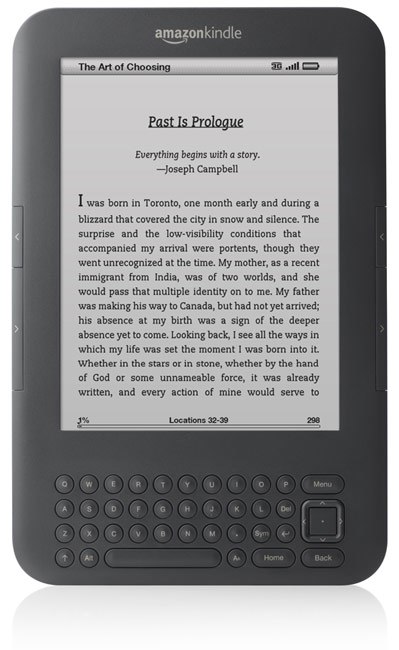
I doubt that many people would turn their nose up at the chance to read the likes of The Invisible Man, War of the Worlds, The Lost World, Twenty Thousand Leagues Under the Sea and Around the World in Eighty Days for that kind of price. And that's just one thing that makes owning a Kindle worth it. I've also been able to download the complete works of William Shakespeare for 70p. Mary Shelley's Frankenstein is another book I've enjoyed that came for a minuscule price tag; or, as most people call it, free.
There are quite a few books out in the public domain these days. In theory, they're all available for free, with the copyright having expired. And in general it is possible to get hold of these works for free (generally, you're paying for the work people have put in compiling them all into one electronic volume, creating the links and the bookmarks and the contents pages and what have you). And, what's more, it's worth it.
Reading Frankenstein over the weekend was highly enjoyable. For all its faults - as a modern reader would see it - such as stilted, unrealistic dialogue and occasional overwritten passages, it was a good old-fashioned story, a ripping yarn as some of us more rustic folk would say. And all after one click of a button. The same goes for The Invisible Man, which I shot through in just under 24 hours.
So what else is out there? For the more romantically inclined (in other words, not me), there's Pride and Prejudice to get stuck into. (My own personal opinion is that it's grossly overrated, but those thoughts are for another blog). Horror fans who haven't yet read Dracula can do so without spending over the odds for a Penguin Classic edition complete with a redundant introduction from a contemporary writer. And racists among us can enjoy Heart of Darkness free of charge (again, that's an argument to be made for another blog).
So there's loads of free reading material out there to get stuck into, if you have a Kindle. So what if you're not thumbing through a book itself; chances are many of these classics generally wouldn't cross your path and here's a great chance to try something new (or old, as the case actually is).
Next up for me and my Kindle is The Island of Doctor Moreau. I'm looking forward to it. Expect more posts about my Kindle fairly soon...
Sunday, 20 March 2011
He who controls the spice...

At the time of writing, I'm on about my sixth re-read of Dune, Frank Herbert's SF classic. This in itself is unusual; I've been on a binge of broadening my horizons of late, and I've not been going back to old favourites like I used to. But it's a mark of the book's quality that I've read and re-read it so often.
Dune is rightly part of the SF canon. First published in 1965, it tells the story of Paul Atreides, ducal heir his Great House. The Atreides House is sent to Arrakis (Dune... Desert planet...) by the Emperor to oversee the production of the galaxy's most valuable commodity, the spice melange. In doing so, the Atreides take the planet from their mortal enemies, the Harkonnens.
I'm not doing a great job of summarising the plot here. If it sounds deathly dull, I apologise, because it isn't. Dune is one of the most engrossing novels I've ever read. It has its failings, but then so do most books, and most don't have the layered complexity of Dune.
That's where the strength of Dune lies. It can be read as an escapist adventure - like it was by the 16-year-old who first picked it up - or as a piece of classic science fiction literature. On one hand there's the thrilling tale of what's good and right and honourable against corruption and evil. On the other, there's the themes of ecology, zoology, psychology and politics. Dune is a novel staggeringly relevant to the times we live in, especially with regards to what happens in the Middle East.
Perhaps it's ironic that a novel in part about prescience is one of the most prescient ever written in the context of our own world. Or maybe it isn't. Either way, it's an example of SF at its very finest - leading the way for the rest of the world to follow. If you don't possess a copy, go out and get one now. Read it. Then reflect on the influences beyond the pages of a £7.99 paperback.
(Just be certain that if you do enjoy it, to not then read on beyond Children of Dune. Because if you do, you'll be severely disappointed. Read the Foundation trilogy by Isaac Asimov instead.)
Sunday, 13 March 2011
The Very Hungry Helicopter
Bladed rotors in the sky at night,
Steady, keeping craft in flight.
Hovering for moments, light on ground,
Always making the constant sound:
Nomnomnomnomnomnom.
Like a hungry Pac-Man chased by ghosts,
Or a field of cows constrained by posts,
Flighted sentinel of the darkest night,
Keeping watch from a great height.
(Possibly the most hopeless attempt at poetry in years. Especially the Pac-Man reference. But it's all come from a curious conversation walking home from Newcastle on Thursday night/Friday morning at 1am.)
Steady, keeping craft in flight.
Hovering for moments, light on ground,
Always making the constant sound:
Nomnomnomnomnomnom.
Like a hungry Pac-Man chased by ghosts,
Or a field of cows constrained by posts,
Flighted sentinel of the darkest night,
Keeping watch from a great height.
(Possibly the most hopeless attempt at poetry in years. Especially the Pac-Man reference. But it's all come from a curious conversation walking home from Newcastle on Thursday night/Friday morning at 1am.)
Friday, 11 February 2011
How did they make me read...?
Maybe it's because I'm a 21-year-old man, but I feel uneasy simply possessing a copy of Lolita. More than once I've looked up at my bookshelf with the spine of the book facing out, declaring its presence to any who see it. On these occasions it has seemed to be shouting its existence to the world, standing out from surrounding volumes. To Kill A Mockingbird? Sedately existing in the background. Do Androids Dream Of Electric Sheep seems to fade away into the unnoticed ether. And as for Stranger In A Strange Land, well, it seems to just not exist.
I don't think I particularly want to admit that I'm reading Lolita now. My embarrassment is noticeable with regards to the fact I'm taking the short story collection I'm reading downstairs to read, but Lolita has stayed in my room, hidden away like an illegal document.
I shouldn't feel this way. Lolita is a verified modern classic. Its use of the English language is reason alone to read it (after 139 pages, it's clear that Nabokov was glorying in his adopted tongue). And I wanted to read it as a challenging read. But it's just that I'm a young man reading about a grown man having sex with a 12-year-old girl. If people knew, then surely awkward questions would be asked?
The reason I'm saying I'm reading it is that I shouldn't be embarrassed about broadening my literary horizons. I'm not going to exactly go waving it round in people's faces saying 'hey, hey, hey, I've read this', but in future discussions it's an interesting point to raise. That I read Lolita.
Not that this is stopping me wanting to have it finished by the time I return to uni. The stigma of reading it up there might just kill me.
I don't think I particularly want to admit that I'm reading Lolita now. My embarrassment is noticeable with regards to the fact I'm taking the short story collection I'm reading downstairs to read, but Lolita has stayed in my room, hidden away like an illegal document.
I shouldn't feel this way. Lolita is a verified modern classic. Its use of the English language is reason alone to read it (after 139 pages, it's clear that Nabokov was glorying in his adopted tongue). And I wanted to read it as a challenging read. But it's just that I'm a young man reading about a grown man having sex with a 12-year-old girl. If people knew, then surely awkward questions would be asked?
The reason I'm saying I'm reading it is that I shouldn't be embarrassed about broadening my literary horizons. I'm not going to exactly go waving it round in people's faces saying 'hey, hey, hey, I've read this', but in future discussions it's an interesting point to raise. That I read Lolita.
Not that this is stopping me wanting to have it finished by the time I return to uni. The stigma of reading it up there might just kill me.
Labels:
book,
embarrassment,
interesting,
Lolita,
reading,
stigma,
Vladimir Nabokov
Friday, 14 January 2011
Long days, dark nights
It's been a stressful few days. Since returning to uni I've worked perhaps 60 hours on various aspects of uni work, and I've had very little time to myself. Last night's football was a welcome work-out to relieve stress.
Unfortunately it's likely to be the last time I play for some three months. Uni's timetable isn't conducive to any of the activities I like doing, so I won't get the chance to play and I'm also finally sorting out my long-standing knee injury. If I need surgery that'd put me out for about six months, as I reckon it's a cartilage problem that'd need more than just physio to cure. But I'm no expert, and it might just be residual problems arising from a dislocated knee.
But that pain would pale in comparison to my present workload. Two pieces of coursework, several SPSs to prepare, a dissertation and the SLO all going on at once makes for a very stressed and not particularly happy me. Especially seeing as one of those pieces of coursework is being redrafted after I made a mess of it the first time. And progress is sloooow, or so it seems; considering the volume it feels like I'm hardly making an indent.
Progress is also slow on the short stories I'm writing and the books I'm reading. I've only completed two in the first fortnight of the year (an unprecedentedly low number), and the Lovecraft collection has taken me almost 3 weeks.
I'm not sure I like Lovecraft. His style is hard work to read and he sometimes seems lazy in his descriptions. When he says something defies description it feels like a copout, and the multiple times he finishes a story in exactly the same way is just plain frustrating. Still, he has his moments.
On the short story front, I have half a dozen ideas I'm trying to work on, one of which is properly in the writing process, but it's just getting the chance. Uni is, unfortunately, a little onerous in its demands at the moment.
Unfortunately it's likely to be the last time I play for some three months. Uni's timetable isn't conducive to any of the activities I like doing, so I won't get the chance to play and I'm also finally sorting out my long-standing knee injury. If I need surgery that'd put me out for about six months, as I reckon it's a cartilage problem that'd need more than just physio to cure. But I'm no expert, and it might just be residual problems arising from a dislocated knee.
But that pain would pale in comparison to my present workload. Two pieces of coursework, several SPSs to prepare, a dissertation and the SLO all going on at once makes for a very stressed and not particularly happy me. Especially seeing as one of those pieces of coursework is being redrafted after I made a mess of it the first time. And progress is sloooow, or so it seems; considering the volume it feels like I'm hardly making an indent.
Progress is also slow on the short stories I'm writing and the books I'm reading. I've only completed two in the first fortnight of the year (an unprecedentedly low number), and the Lovecraft collection has taken me almost 3 weeks.
I'm not sure I like Lovecraft. His style is hard work to read and he sometimes seems lazy in his descriptions. When he says something defies description it feels like a copout, and the multiple times he finishes a story in exactly the same way is just plain frustrating. Still, he has his moments.
On the short story front, I have half a dozen ideas I'm trying to work on, one of which is properly in the writing process, but it's just getting the chance. Uni is, unfortunately, a little onerous in its demands at the moment.
Labels:
Law,
Lovecraft,
reading,
rewrite,
short stories,
stress,
university,
writing
Sunday, 19 December 2010
Gardens of the Moon
I have to admit to having not enjoyed much fantasy lately. I've enjoyed A Song of Ice and Fire, but that's been about it. Perhaps it's because I've wanted my fiction to be more grounded in reality (or, at least, plausibility), but fantasy hasn't been hitting the spot for me. It's probably good for people to know this ahead of this review, as I think had fantasy been doing it for me this review would be very different.Gardens of the Moon was recommended to me by a friend about 18 months ago and I picked up a copy pretty soon after (second hand, £1.75 - considering that it was in tremendous nick and only a couple of years old I thought I'd got a bit of a bargain there). It's taken until now for me to get round to reading it, which is a bit of a surprise considering that I normally read this kind of book inside a week or two. Perhaps it was because I've had stacks of books on the bookcase unread for the last couple of years and I was just working my steady way through those. Perhaps it was because part of me just didn't fancy the 750-page brick. Either way, I should have read it ages ago.
The wait wasn't really worth it. I can see why people would enjoy it, but these were the same reasons I didn't. Throughout the book the narrative sustains a breakneck speed, whizzing from one bit of the action to another without thought for allowing the reader to gather his own thoughts and take stock of the situation. I can see why this can be addictive and compelling reading, but I personally prefer for an author to have a bit of patience. Breakneck pacing is all well and good, but some explanation as to what's going on in the first place and a bit of a recap every now and then wouldn't go a million miles amiss.
Steven Erikson came across to me as a writer very much bursting with ideas, many of which were original and exciting. I really mean that. Some of his ideas were tremendous, such as the mix of gods and mortals in the cast. But he needed (as of 1999) to learn to slow this all down and reveal his world slowly. I floundered when it came to keeping up with some of his revelations, because I hadn't the foggiest where they'd come from and how it impacted because he'd not explained properly just what this god had to to with that mortal and how it all tied in.
If I described Gardens of the Moon as a 1,200 page trilogy all rammed into a single 700 page volume it would probably best sum up my feelings on the pacing. Too much, too fast.
But then again, it did leave an impression (at the end, when I'd sussed out what was going on). Erikson isn't a descriptive writer, and he has a driving style that, when applied properly to his plot, is compelling. He hasn't got a legion of intelligent fans for nothing, and at some point I may go back to it, if only he drops things like assassins guilds and the street urchins helping to broker power. Seriously - that's been done to death and annoys me so much these days that I've written a spoof meeting of assassins.
Labels:
book,
fantasy,
Gardens of the Moon,
reading,
Steven Erikson
Sunday, 12 December 2010
December ramblings
After recently getting practically no time to do any writing whatsoever beyond scribblings in legalese, I may finally get the opportunity to get stuck in to a meaty bit of fiction over the next couple of weeks.
I'll freely admit that I don't expect it to be any good. It'll be a matter of bringing myself back up to scratch through doing a bit of editing and tinkering before starting on anything new, but then it's hardly my fault I'm shockingly out of practice. Uni takes priority, and it will continue to do so during the holidays (the target is to do both pieces of coursework - totalling 7,000 words - and at least 3,000 words of my dissertation over the three weeks off). But with no seminars or SPSs, I stand a chance of being able to get at least one story done, and I have an idea of what that story will be.
In other news, I got a rejection the other day for a piece of flash fiction I sent off. It had been previously rejected in perhaps the most pretentious manner possible (resulting in that website going on my blacklist - no, I'm not bitter at all), so to get this rejection back was a breath of fresh air. It was helpful, pointed out the flaws they believed the story had and seemed almost apologetic that they hadn't taken it on. I'm definitely submitting there again. As for the story, it's gone off again for the final time before time is called on it and it's posted up here.
One thing about uni has been that I've been able to get plenty of reading done in the evenings, when the cricket isn't on. Recent readings have included Isaac Asimov's Complete Stories (volume 1), Stephen Baxter's quasi-history Evolution, and, for my Law and Literature module, The Trial. At some point I may review them on here.
But in the mean time, Christmas is coming. X-Factor number ones, socks from your grandmother, dodgy Christmas specials on the telly and the inevitable Boxing Day murder of an aunt by your sister after she bought the wrong colour bobble hat.
Oh joy.
I'll freely admit that I don't expect it to be any good. It'll be a matter of bringing myself back up to scratch through doing a bit of editing and tinkering before starting on anything new, but then it's hardly my fault I'm shockingly out of practice. Uni takes priority, and it will continue to do so during the holidays (the target is to do both pieces of coursework - totalling 7,000 words - and at least 3,000 words of my dissertation over the three weeks off). But with no seminars or SPSs, I stand a chance of being able to get at least one story done, and I have an idea of what that story will be.
In other news, I got a rejection the other day for a piece of flash fiction I sent off. It had been previously rejected in perhaps the most pretentious manner possible (resulting in that website going on my blacklist - no, I'm not bitter at all), so to get this rejection back was a breath of fresh air. It was helpful, pointed out the flaws they believed the story had and seemed almost apologetic that they hadn't taken it on. I'm definitely submitting there again. As for the story, it's gone off again for the final time before time is called on it and it's posted up here.
One thing about uni has been that I've been able to get plenty of reading done in the evenings, when the cricket isn't on. Recent readings have included Isaac Asimov's Complete Stories (volume 1), Stephen Baxter's quasi-history Evolution, and, for my Law and Literature module, The Trial. At some point I may review them on here.
But in the mean time, Christmas is coming. X-Factor number ones, socks from your grandmother, dodgy Christmas specials on the telly and the inevitable Boxing Day murder of an aunt by your sister after she bought the wrong colour bobble hat.
Oh joy.
Labels:
books,
Christmas,
degree,
Law and lit,
reading,
short stories,
writing
Saturday, 16 October 2010
The Crucible

If you're a snooker fan who's clicked the link hoping for comments about the home of said pastime (it isn't a sport, don't argue that it is), unlucky.
No, this is a review of Arthur Miller's classic play from 1953, the one that focusses on the Salem witch trials in a cutting criticism of mass hysteria surrounding McCarthyism in the USA. The two don't initially seem linked, but throw in the words 'mass hysteria' and suddenly they are. Miller deals expertly with a situation getting out of hand as public hysteria takes over from reasoned thought. Normally, the salient phrase is 'witch-hunt' but on this occasion, it's just too obvious.
I don't normally read plays for fun, and this one is no different. Although that isn't to say I didn't enjoy it, because I did. Greatly. When reading Shakespeare (yes, I have read and do read old Shakey's stuff, deal with it), I often struggle with the poetry and getting a beat to the whole thing. The prose in Miller's play is much easier on the brain, but is no less profound for it. There's a frenetic tempo the the thing, the play whipping by (when reading it) in just a couple of hours.
The intensity is just one of the things I liked the most. Combine the intensity with a gripping tale in the first place, of deceit and murder, and you're on to a winner, and the adaptation of the Salem Witch Trials are certainly that tale. I can't pretend to know much about them (other than the references in Harry Potter, which is pretty poor going for someone who professes to be fairly educated), but from what I do know, the events depicted are accurate and, when one applies them to the era in which the play was written, the allegory between the era and the play becomes far more obvious.
McCarthyism was in full swing when the play was first performed. People were being hauled in front of senate committees for being 'un-American' (which is ironic, considering America is allegedly the land of do whatever the flip you want). A witch-hunt was in progress in a metaphorical sense. People were running scared of a Communist threat that was, at best, minimal, and certainly had few links to the Soviet Union, but, oh look, it's an uninformed public and we have mass hysteria through the actions of a few who know how to manipulate the masses.
What has been said about McCarthyism has been said a hundred times and a slightly uninformed student with socialist tendencies isn't going to be able to add to the debate, other than to say that the Americans need to grow up when it comes to politics. Miller had his finger on the pulse and understood the situation. He was probably one of only a few.
I apologise for this being a pretty rushed review focussed more on political issues than the play at hand.
Labels:
Arthur Miller,
Communism,
Law and lit,
politics,
reading,
review,
socialism,
The Crucible
Friday, 1 October 2010
The City & The City

China Miéville wasn't a writer I was particularly aware of until recently. Then I got a recommendation, which declared him the greatest thing since sliced bread. The City & The City is the first book of his I've read, and if that's typical of his works then the recommendation is bang on the money.
Let me start by saying not much I've read this year has left me feeling wowed. It may be that this is the first novel to have me reeling in thought, absolutely stunned by the way it's left me in that state. The City & The City is subtle and intelligent, multi-faceted, encompassing more than the typical SF detective novel.
Set in a fictional city on the edge of Europe with Balkan overtones, the novel focuses on Inspector Borlú, of the Extreme Crimes Squad in Besźel, as he investigates a murder. As is typical in SF detective novels, there's more to this than 'ooh, look, a trollop who's gone and got stabbed by her lover's jealous missus oh dear'. What we get here is a curious concept of two cities encompassing the same topographical location. The politics of these two cities, Besźel and Ul Qoma, as well as the way the two cities coexist, make up the bulk of the novel's intelligent commentary on what we see and don't see in our own society, as well as the alienation in the same.
The concept is original enough, but its execution is superb. What I just told you does not do it justice. That I told you it says it all; Miéville weaves exposition of the world into the plot with such subtlety that no single passage at any stage can be said to be explaining the world. The concept permeates your mind rather than being forced upon it by heavy-handed infodumps. I can imagine that each reader will see their own version of the city and the city, rather than everyone being straightjacketed into one distinct vision. This makes the underlying alienation all the more stark.
At the heart of the story is a relentless pace that grips the reader and leaves them breathless. It has all the ingredients of the whodunnit in the Morse sense (although Morse tended not to have investigations into more than just the case); the culprit's eventual identity doesn't come as a surprise so much, as the point of the novel isn't the murder itself but the surrounding circumstances, but it still holds the attention. For a casual reader of mysteries, uninterested in the philosophies underlying the plot, the case would hold water. But it really is those surrounding circumstances that make the book what it is: brilliantly intelligent, and almost insidiously subtle.
Will I be reading more of China Miéville's work? Undoubtedly, yes. This is a novel that had me captivated in its themes and world more than any other since Look To Windward. I'm hard pushed to find a genuine weakness in Miéville's work, and I can't imagine it'll be too long before I pick up a copy of one of his other works.
Labels:
book,
China Mieville,
novel,
reading,
review,
science fiction
Friday, 17 September 2010
Let The Right One In

I've gone and done the usual. A 520-page book has been devoured in about three days, and I have no one to blame but myself. It's a testament to a book when it gets this treatment, to be fair, and it normally shows that I've really enjoyed it.
I certainly did enjoy Let The Right One In. There isn't much more to say. It's a vampire novel set in the Stockholm suburbs in 1981, against the backdrop of an estate (for want of a better word) battling with social problems. The plot focusses mainly on Oskar, who befriends a girl called Eli, while a series of fairly brutal murders take place. It's a poignant story of trust and friendship, and I really can't think of much more to say about it from that point of view.
As you may be able to tell, unless I'm insulting something I struggle to review it.
So, where can the bad stuff be found? It isn't a particularly great translation from the Swedish, so the prose can be clunky and awkward at times, but that's to be expected with translations; barring Crime and Punishment I can't think of any particularly outstanding ones I've read lately. Another complaint might be that at times the violence and bleakness can be a little overwhelming, particularly towards the end.
But these were overlooked. I enjoyed the energy of it, the pathos of the characters, and the driving pace of the story. It was compelling stuff (as evidenced by the fact I read the whole back half of it this afternoon when I was supposed to be dissertationing), and it left me with a sense of fulfilment.
So do I recommend Let The Right One In? Yes, I do. Highly. If you can deal with the depressing subject matter and the occasional clunky bit of prose and want a vampire novel that will get under your skin, go for it.
Now for the film(s)...
Labels:
let the right one in,
novel,
reading,
review,
vampire
Wednesday, 15 September 2010
And another update
As you may be able to tell, my imagination fails somewhat when it comes to titles. This has always been a problem of mine, and one I really do need to suss out. My submission to Clarkesworld has probably the worst title possible because it was one I bunged in to act as a filler while I thought of something better. Lo and behold, I failed in that quest to find a better title and it went away with a thoroughly naff title. When it comes back rejected (which will be soon - it's 9th in the reading queue at the time of writing, up 192 places from a week ago. Eh, it's just like Top of the Pops), I'll be working on that title first and foremost before going back and reconstructing the basic premise of the piece.
Fortunately, imagination doesn't fail me quite so much when it comes to search terms for my dissertation, which I got to work on yesterday with a 2 1/2 hour session searching for articles and cases. Thanks to creative thought, I managed to find 50 cases and articles, some of which I need to follow-up in the practice library once I go back in there. On the other hand, most of those articles can be read in full now, and ought to contain links to arguments made by other articles which I haven't picked up on yet. All in all, it was a decent academic day, only dampened by the PFA not getting back to me on the subject of insurance.
Unfortunately for my writing, the dissertation means that I haven't got any further with a story I'm writing for this anthology. That said, I can work on it while my many hundreds of pages are printing off for me to read. So it isn't all bad news.
I've been back in Newcastle over the last couple of days, and I've thoroughly enjoyed myself, even if the vacuum cleaner doesn't work properly. I need to sort a few things out yet (like dry cleaning my suit for the new year and washing and ironing shirts), but by and large I'm pretty much ready to go for my final year doing the LLB Bar Exempting course. It does have to be said that I don't envisage this being my last year ever at uni, as I'd quite like to go back and do a masters degree, probably in Law, and maybe get another bachelors degree (in a science, probably, seeing as I've spent the last couple of years dipping into science journals and keeping up to date with developments).
And finally, I've been reading Let The Right One In over the past couple of days. I'm not very far in (120 pages), but thus far I've enjoyed it, even if my writer's mind has taken over every now and then, looking at the occasionally clunky translated prose, thinking 'that's clumsy - I could probably do better'. But with that said, I probably couldn't write the material itself, so I shouldn't criticise.
Fortunately, imagination doesn't fail me quite so much when it comes to search terms for my dissertation, which I got to work on yesterday with a 2 1/2 hour session searching for articles and cases. Thanks to creative thought, I managed to find 50 cases and articles, some of which I need to follow-up in the practice library once I go back in there. On the other hand, most of those articles can be read in full now, and ought to contain links to arguments made by other articles which I haven't picked up on yet. All in all, it was a decent academic day, only dampened by the PFA not getting back to me on the subject of insurance.
Unfortunately for my writing, the dissertation means that I haven't got any further with a story I'm writing for this anthology. That said, I can work on it while my many hundreds of pages are printing off for me to read. So it isn't all bad news.
I've been back in Newcastle over the last couple of days, and I've thoroughly enjoyed myself, even if the vacuum cleaner doesn't work properly. I need to sort a few things out yet (like dry cleaning my suit for the new year and washing and ironing shirts), but by and large I'm pretty much ready to go for my final year doing the LLB Bar Exempting course. It does have to be said that I don't envisage this being my last year ever at uni, as I'd quite like to go back and do a masters degree, probably in Law, and maybe get another bachelors degree (in a science, probably, seeing as I've spent the last couple of years dipping into science journals and keeping up to date with developments).
And finally, I've been reading Let The Right One In over the past couple of days. I'm not very far in (120 pages), but thus far I've enjoyed it, even if my writer's mind has taken over every now and then, looking at the occasionally clunky translated prose, thinking 'that's clumsy - I could probably do better'. But with that said, I probably couldn't write the material itself, so I shouldn't criticise.
Labels:
let the right one in,
reading,
short stories,
university,
updating,
writing
Friday, 10 September 2010
Transition and other stuff
It's been a pretty tough day on the writing front, I have to admit. Words have flowed easily over the past few weeks, but there have still been odd days where for whatever reason it's just not come and I've ended up giving it up as a bad job, going off to brood on whatever it was that went wrong. Today has been one of those days. I've managed 800 words - an hour or so of solid writing - but none of those have been saved. Chances are I'll go back and restart the story I'm working on tomorrow, or at least make major revisions to what I have.

As a result of this mini-block, I've spent much of the day reading. Over the past few days I've been reacquainting myself with the dark, sexy underworld of Iain Banks (or his books, at any rate) in the form of Transition, his latest novel, which went paperback a month or so back.
It's an interesting read. Our world forms just one reality in a multiverse which is overseen by the Concern (what is it about Banks and his organisations or civilisations being single words beginning with 'C' - Culture and Concern?) and its operatives. It's a tale of power-plays within the organisations and of good and evil. Perhaps most importantly, it's a novel of our times.
It says it right at the start. This is a novel about the post-9/11 world, about the credit crunch, the banks, counter-terrorism and moralities connected to all of the previously mentioned. A book for kids this ain't. It's adult in every sense of the word, being both intelligent in its analysis of the world around us and also being violent - with graphic depictions of torture among other things - and sexually-charged - the amount of detailed sex scenes is a little on the high side for my taste, it has to be said.
In fact, there are a few things which I'm not happy with. At times it feels like Banks is pontificating about his world view. Adrian the banker is the biggest symptom of this. He's a young banker, a former drug-dealer who still takes some, who indulges in meaningless sex with hundreds of women and lives a generally carefree playboy lifestyle. It feels like Banks is pinning the banking crisis on this one man.
Another problem that I had was that the novel feels like disconnected threads for much of its duration, and that some of those threads could have been cut out. Had it been left up to me, I wouldn't even have had the Philosopher's storyline. I understand what Banks is trying to say, but it feels superfluous. But then again, my own preference has always been for tightly-plotted novels, where every word counts for something towards the conclusion, so that might be something you bear in mind when considering this.
But I did enjoy it, and it's worth remembering this. It whips along at a brisk pace and is skilfully constructed. I'm not going to be put off reading more Iain (M.) Banks at any point in the near future, unless Surface Detail is the worst book in the history of the English language (which it won't be).

As a result of this mini-block, I've spent much of the day reading. Over the past few days I've been reacquainting myself with the dark, sexy underworld of Iain Banks (or his books, at any rate) in the form of Transition, his latest novel, which went paperback a month or so back.
It's an interesting read. Our world forms just one reality in a multiverse which is overseen by the Concern (what is it about Banks and his organisations or civilisations being single words beginning with 'C' - Culture and Concern?) and its operatives. It's a tale of power-plays within the organisations and of good and evil. Perhaps most importantly, it's a novel of our times.
It says it right at the start. This is a novel about the post-9/11 world, about the credit crunch, the banks, counter-terrorism and moralities connected to all of the previously mentioned. A book for kids this ain't. It's adult in every sense of the word, being both intelligent in its analysis of the world around us and also being violent - with graphic depictions of torture among other things - and sexually-charged - the amount of detailed sex scenes is a little on the high side for my taste, it has to be said.
In fact, there are a few things which I'm not happy with. At times it feels like Banks is pontificating about his world view. Adrian the banker is the biggest symptom of this. He's a young banker, a former drug-dealer who still takes some, who indulges in meaningless sex with hundreds of women and lives a generally carefree playboy lifestyle. It feels like Banks is pinning the banking crisis on this one man.
Another problem that I had was that the novel feels like disconnected threads for much of its duration, and that some of those threads could have been cut out. Had it been left up to me, I wouldn't even have had the Philosopher's storyline. I understand what Banks is trying to say, but it feels superfluous. But then again, my own preference has always been for tightly-plotted novels, where every word counts for something towards the conclusion, so that might be something you bear in mind when considering this.
But I did enjoy it, and it's worth remembering this. It whips along at a brisk pace and is skilfully constructed. I'm not going to be put off reading more Iain (M.) Banks at any point in the near future, unless Surface Detail is the worst book in the history of the English language (which it won't be).
Tuesday, 7 September 2010
Submissions (not like that)
The post is starting to annoy me. Over the last few years it's been getting gradually later, which is especially annoying when you need to go somewhere but can't go anywhere until the parcel you were expecting has arrived (or, more commonly, not) with the morning post. Only it's never morning these days. It's early afternoon, which is ridiculous.
It would also be nice if Amazon actually did as I told them. I asked for the two books I ordered the other day to be packaged together. It makes sense, doesn't it? Less packaging is better for the environment and cheaper for the company itself. Apparently, though, Amazon doesn't do that, and has instead sent me them separately. Or, rather, it's sent me one and the other's apparently still en route to my front door.
As you may be able to tell, I'm a little cranky this evening. I could do with my tea, but what was promised for six is now definitely going to be ready for seven (or so I'm told). According to the person in charge, it was always going to be seven. What is this, the Wilson family equivalent of the Ministry of Truth in 1984? Blimey.
I've followed up my submission of a piece of flash fiction to a website the other day with the submission of a short story to Clarkesworld. Apparently, Clarkesworld is one of the hardest markets to crack (probably because they pay so well), but I quite fancy the challenge. So, off this story has gone, quite probably coming back in a day or two's time with a 'get stuffed' note attached. Unfortunately, rejection is likely to happen a few times over the next few weeks.
This is the writing Gom Jabbar, the acid test of whether a writer really is serious, has self-belief and is prepared to keep plugging away. In the past, I failed it - I got a few rejection slips and by self-belief was hit hard. To be fair, I was about 16. I was inexperienced and had only been writing 3 years. It was raw stuff I was sending away, and it isn't a surprise. My stuff now may not be world-changing, but it's better than what was going off then.
Unfortunately, many talented writers get their first rejection and never submit again. On the other hand, many who are convinced they're God's gift to literature receive their first rejection and do exactly the same, so there's an upside to every problem (how many are convinced the editor just didn't get their work is not something up for discussion right now). My message to the former of these two classes is to keep working at it. We're in the same boat, you and I, two (or more) hopefuls auditioning for a chance to grasp the first rung of the publishing ladder. I know that when my work's rejected I'll just be resubmitting it and working on other things at the same time.
Best of luck to you! You stand a better chance of publication than I do of getting my tea at any point in the next century.
It would also be nice if Amazon actually did as I told them. I asked for the two books I ordered the other day to be packaged together. It makes sense, doesn't it? Less packaging is better for the environment and cheaper for the company itself. Apparently, though, Amazon doesn't do that, and has instead sent me them separately. Or, rather, it's sent me one and the other's apparently still en route to my front door.
As you may be able to tell, I'm a little cranky this evening. I could do with my tea, but what was promised for six is now definitely going to be ready for seven (or so I'm told). According to the person in charge, it was always going to be seven. What is this, the Wilson family equivalent of the Ministry of Truth in 1984? Blimey.
I've followed up my submission of a piece of flash fiction to a website the other day with the submission of a short story to Clarkesworld. Apparently, Clarkesworld is one of the hardest markets to crack (probably because they pay so well), but I quite fancy the challenge. So, off this story has gone, quite probably coming back in a day or two's time with a 'get stuffed' note attached. Unfortunately, rejection is likely to happen a few times over the next few weeks.
This is the writing Gom Jabbar, the acid test of whether a writer really is serious, has self-belief and is prepared to keep plugging away. In the past, I failed it - I got a few rejection slips and by self-belief was hit hard. To be fair, I was about 16. I was inexperienced and had only been writing 3 years. It was raw stuff I was sending away, and it isn't a surprise. My stuff now may not be world-changing, but it's better than what was going off then.
Unfortunately, many talented writers get their first rejection and never submit again. On the other hand, many who are convinced they're God's gift to literature receive their first rejection and do exactly the same, so there's an upside to every problem (how many are convinced the editor just didn't get their work is not something up for discussion right now). My message to the former of these two classes is to keep working at it. We're in the same boat, you and I, two (or more) hopefuls auditioning for a chance to grasp the first rung of the publishing ladder. I know that when my work's rejected I'll just be resubmitting it and working on other things at the same time.
Best of luck to you! You stand a better chance of publication than I do of getting my tea at any point in the next century.
Labels:
publication,
reading,
short stories,
submissions,
writing
Monday, 30 August 2010
Podcasting and SF's health
It's been a while since I thought particularly hard about science fiction.
Well, that opening line scared off about half of the people likely to have a read of this post. If you're still around, carry on reading, especially if you've not really read SF before. You might read about something you may want to give a try. If you're already an SF fan, you might have heard all this before, if I'm perfectly honest.
A couple of weeks ago, a friend introduced me to Escape Pod, a science fiction podcast. I didn't subscribe straight away, instead waiting a couple of days and then downloading the latest edition. It featured Eugene, by Jacob Sager Weinstein which wasn't the most engaging of stories, if I'm honest. It featured a talking dog - for want of a better phrase, as it was a little more anatomically complex - in the police force. But what got me hooked was the discussion of the piece by the editor, Mur Lafferty.
It struck me then that SF is in good hands these days. It wasn't so long ago that I thought SF was in decline. The writers of the SF Golden Age were passing. Arthur C. Clarke - perhaps the greatest of them all - died in 2008. Philip K. Dick has been dead for more than two decades. Brian W. Aldiss is still alive, but well into his twilight years. Isaac Asimov is no longer with us. There are a handful of good - occasionally nigh-on great - popular SF writers, but compared to what the genre was thirty years ago, it didn't seem to be in the rudest of health. In the US especially writers seemed more interested in writing escapist fantasy rather than intelligent SF.
In my defence, what's on the shelves at Waterstones in Huddersfield isn't necessarily the greatest selection. Intelligent SF readers in the region are at a premium, it would be fair to say, and when I was at college fantasy was all the rage amongst people who I sat around passing time with. And if it wasn't them, it was the literary snobs in English Literature who turned their nose up at anything if it hadn't won a Pulitzer. Hugos? Nebulas? Not for them.
That statement about the English Lit class is a little harsh to most of the class, really, but my point is that nobody read SF. Asimov, Bradbury, Clarke, Dick, etc, were all alien names, when I have the feeling that 30 years ago they were at least known and respected, if not widely read by 'literary' people.
I'm getting off-topic. The point is that I felt SF wasn't where it should be. Magazines had declined following the advent of easily-available internet on top of the decline of intelligent SF on the shelves of bookshops.
But I'm pleased to report that my fears are far from the truth. Yes, the SF magazine has declined over recent years. Until recently I didn't know where to pick up the biggest SF magazine in Britain, and if I wanted to get a copy of Interzone from the shops it would involve a trek to Leeds, a round trip of some 30-odd miles. However, we see short stories available on the internet, often for free. I downloaded a magazine in PDF form - The Literary Hatchet - the other day, and found it to be fairly high-quality. Perhaps the stories weren't to my taste, but there is good short fiction out there to be read.
Going back to Escape Pod, it's been brilliant to subscribe to it and have a new short story arrive in audio form for free once a week. Short fiction has been something I've neglected in the past, so having this available to me to listen to has been a godsend. I've been listening through the back episodes and subscribing to other podcasts as well - Pseudopod and Starship Sofa, the former of which is horror rather than SF - and what has struck me most isn't the high quality. It's been the passion of the people behind it, the labour of love that each and every story is.
I have a feeling that this sort of presentation is the future of SF. The passion of the people behind these podcasts - and the fact that they work in symbiosis with each other, rather than competing per se - leaves SF with a rosy future. Perhaps now we're seeing a lull, because some of these SF writers I've been listening to stories from are exceptionally talented people.
One thing is that the podcasts need donations to survive. As much as we all want to receive everything for free, people providing services do need to survive, and it's only right that writers and other contributors are paid for their work. I may not be able to donate right now (I'm a skint student, for heaven's sake), but once I'm financially stable, I'll probably be donating £5 or £10 a month. If each person who listens to it does something similar, maybe we'll see these podcasts improve and thrive even more than they are now.
So search for Escape Pod, Pseudopod, Starship Sofa and Cast Macabre (amongst others) on the iTunes Music Store, in the podcasts section. Subscribe. And enjoy. And many thanks to Matthew Dent for pointing them out to me in the first place.
Well, that opening line scared off about half of the people likely to have a read of this post. If you're still around, carry on reading, especially if you've not really read SF before. You might read about something you may want to give a try. If you're already an SF fan, you might have heard all this before, if I'm perfectly honest.
A couple of weeks ago, a friend introduced me to Escape Pod, a science fiction podcast. I didn't subscribe straight away, instead waiting a couple of days and then downloading the latest edition. It featured Eugene, by Jacob Sager Weinstein which wasn't the most engaging of stories, if I'm honest. It featured a talking dog - for want of a better phrase, as it was a little more anatomically complex - in the police force. But what got me hooked was the discussion of the piece by the editor, Mur Lafferty.
It struck me then that SF is in good hands these days. It wasn't so long ago that I thought SF was in decline. The writers of the SF Golden Age were passing. Arthur C. Clarke - perhaps the greatest of them all - died in 2008. Philip K. Dick has been dead for more than two decades. Brian W. Aldiss is still alive, but well into his twilight years. Isaac Asimov is no longer with us. There are a handful of good - occasionally nigh-on great - popular SF writers, but compared to what the genre was thirty years ago, it didn't seem to be in the rudest of health. In the US especially writers seemed more interested in writing escapist fantasy rather than intelligent SF.
In my defence, what's on the shelves at Waterstones in Huddersfield isn't necessarily the greatest selection. Intelligent SF readers in the region are at a premium, it would be fair to say, and when I was at college fantasy was all the rage amongst people who I sat around passing time with. And if it wasn't them, it was the literary snobs in English Literature who turned their nose up at anything if it hadn't won a Pulitzer. Hugos? Nebulas? Not for them.
That statement about the English Lit class is a little harsh to most of the class, really, but my point is that nobody read SF. Asimov, Bradbury, Clarke, Dick, etc, were all alien names, when I have the feeling that 30 years ago they were at least known and respected, if not widely read by 'literary' people.
I'm getting off-topic. The point is that I felt SF wasn't where it should be. Magazines had declined following the advent of easily-available internet on top of the decline of intelligent SF on the shelves of bookshops.
But I'm pleased to report that my fears are far from the truth. Yes, the SF magazine has declined over recent years. Until recently I didn't know where to pick up the biggest SF magazine in Britain, and if I wanted to get a copy of Interzone from the shops it would involve a trek to Leeds, a round trip of some 30-odd miles. However, we see short stories available on the internet, often for free. I downloaded a magazine in PDF form - The Literary Hatchet - the other day, and found it to be fairly high-quality. Perhaps the stories weren't to my taste, but there is good short fiction out there to be read.
Going back to Escape Pod, it's been brilliant to subscribe to it and have a new short story arrive in audio form for free once a week. Short fiction has been something I've neglected in the past, so having this available to me to listen to has been a godsend. I've been listening through the back episodes and subscribing to other podcasts as well - Pseudopod and Starship Sofa, the former of which is horror rather than SF - and what has struck me most isn't the high quality. It's been the passion of the people behind it, the labour of love that each and every story is.
I have a feeling that this sort of presentation is the future of SF. The passion of the people behind these podcasts - and the fact that they work in symbiosis with each other, rather than competing per se - leaves SF with a rosy future. Perhaps now we're seeing a lull, because some of these SF writers I've been listening to stories from are exceptionally talented people.
One thing is that the podcasts need donations to survive. As much as we all want to receive everything for free, people providing services do need to survive, and it's only right that writers and other contributors are paid for their work. I may not be able to donate right now (I'm a skint student, for heaven's sake), but once I'm financially stable, I'll probably be donating £5 or £10 a month. If each person who listens to it does something similar, maybe we'll see these podcasts improve and thrive even more than they are now.
So search for Escape Pod, Pseudopod, Starship Sofa and Cast Macabre (amongst others) on the iTunes Music Store, in the podcasts section. Subscribe. And enjoy. And many thanks to Matthew Dent for pointing them out to me in the first place.
Labels:
escape pod,
listening,
podcasts,
reading,
short stories,
writing
Subscribe to:
Posts (Atom)