Sunday, 29 January 2023

The Age of Madness

Say this for Joe Abercrombie: he tests himself.

Say this for Joe Abercrombie: he tests his reader.

Say this final thing for Joe Abercrombie: he's never dull.

Fantasy is all too often about preservation of the status quo. There is something inherently conservative about it in that sense. Pared down to its bare bones - and more of those later - pastoral good defeats industrial evil. JRR Tolkein has much to answer for in that sense. Modern fantasy has started to make moves away from this, but change - fundamental societal and technological change - hasn't really been tackled. Even the best modern fantasy - I'm looking at you, Winnowing Flame trilogy - harks back to preservation over progress.

There are, of course, exceptions. And, of course, Joe Abercrombie marks himself out as one of them. The self-appointed (with good reason, it should be said) Lord Grimdark has always challenged traditional fantasy tropes. In the bloody vanguard of the grimdark movement thanks to the First Law trilogy and its associated standalone novels, he has never been afraid to tackle fantasy conventions head-on. You root for the morally grey - or, in the case of the Bloody Nine himself, the out and out black and evil - in a world of questionable morals. Flaws are inherent in his characters. Idealism be hanged; sometimes literally. This is a world that doesn't dress itself up as perfect.

And, when all is said and done, why would you want to preserve a world like this? This is a world where the central nation, the Union, operates under an anti-democratic closed council. Opponents to the oppressive regime are persued by a secret police that uses the most brutal methods possible to preserve (that word again) power for the ruling few. What could be testing for the reader is how dark it can get. This is a violent world. TV Tropes actively describes it, in an understatement, as a crapsack world that actively makes decent people worse. No wonder the people in it hanker after a Great Change.

Abercrombie's writing ranks amongst the best the genre has to offer. This is a dark, depressing world, but it's leavened with humour - often black - that offers respite. We see regular use of catchphrases to build character. Characters' dialogue feels organic. The world-building is consistently superb, particularly as we see the reinvention of an established world. The writing is sharp and focused, with hardly a wasted world. For no other reason, every fantasy fan and writer should make sure they read at least one of his later novels.

If you're looking for pace, then perhaps the Age of Madness isn't the best place to start with Abercrombie's work. My own preference is for the relentless rhythm and power of the Shattered Sea trilogy when it comes to a relentless narrative thrust. And if you're looking for real focus in the characters, the First Law standalone Best Served Cold offers more. But if you want challenge, and ideas, and invention, the best thing to read is undoubtedly the Age of Madness, the third (second? Does a trilogy of standalone novels count as a trilogy?) trilogy in the First Law world.

Change has been in the offing before. Political consequences have always been inherent within the world. Civilisations rise and fall. But most importantly: things move on. Red Country, the final standalone after the First Law, laid the foundations for a revolution. An Industrial Revolution.

And that is where we pick up. Time has moved on since the first trilogy, as we return in earnest to Adua, capital of the Union, for the first time since Bayaz, First of the Magi, destroyed the Agriont to preserve his political experiment. Thirty or so years have passed. King Jezal, put on the throne by Bayaz himself, is nearing the end of his life, his hedonist delinquent son Orso completely unsuited to rule, while the Closed Council continues to rule with an iron fist. In many regards, this is familiar territory. Unchanging fantasy.

But wait. Those changes in Red Country - itself a pastiche of the western genre - are being felt in Adua. The chimneys of industry rise. We hear of canals and capitalism run amok. Iron rails begin to stretch out of Adua, snaking into the Union itself. Investments by the rich are offset by ruthless exploitation of the poor. Simplified, we see the exploitation of the working class through predictably brutal methods.

It is in this world that we see a collection of interesting - and inevitably flawed - characters. Savine dan Glokta, the ruthless daughter of Sand dan Glokta from the first trilogy, is an amoral investor, a manipulator of men, and noted beauty. At the start of the trilogy, she is engaged in an illicit - and inevitably explicit - affair with Prince Orso. Across the sea, in the North, we find Rikke, the Dogman's daughter, blessed, or maybe cursed, with visions of the future. We also find Leo dan Brock, the Young Lion, the closest we find to a hero at the very start of the series.

If that all sounds safe and easy, rest assured it doesn't stay that way as we navigate a fantasy Industrial Revolution and all it entails. I have missed out many characters who are met during the 1,700 pages or so of the trilogy, and it is these characters who offer much of the moral complexity of Abercrombie's writing. These characters mean it is never short of compelling.

And never short of challenging. Change is inherent in what Abercrombie tries to do. This is the work of a writer unafraid of stetching what is possible within the genre. We see many normal low fantasy traits - we have battles, rebellions, plenty of politicking - but we also see a Great Change akin to the French Revolution. Ideas leap off the page, and the extent to which Abercrombie tests the conventions of fantasy becomes apparent the more we progress.

Perhaps it is inevitable in a series of books this wide-ranging and dense. When I say hardly a word is wasted, this is one of the most tightly-written series you'll come across. In a less masterful writer's hands, the books could easily have been twice the length. What it does mean is that unless you're paying full attention, key moments can be missed. It also meant that at times it feels like the Age of Madness is trying to do too much.

That being said, it's always better to stretch both reader and writer than it is to stick with what is safe and secure. And although some aspects of the Age of Madness don't quite land, one way or another, it is still one of the most significant works in modern fantasy. It is a series fundamentally about change, and about people in that change, and it takes fantasy into - if not uncharted territory - territory that has hardly been explored before. On the fringes of the map we see the cartography of a modern master.

Say this for Joe Abercrombie: he's worth a read.

Sunday, 15 January 2023

Too Like the Lightning

Imagine, reader, that you are the perpetrator of the worst mass murder seen in a utopian society for many years. Imagine that rather than face the ultimate penalty the rest of your days are spent in perpetual penance but in secret, as your very identity poses a risk to your safety. Imagine that you are the one man - or woman, for sex is no hindrance to this - able to balance economies and realities and that you live, almost paradoxically, in a private hive home, surrounded by the humanist and the utopian. The broken and the damned surround you and power flexes itself around you at all times.

Congratulations, reader, for you have placed yourself in the realms of Too Like the Lightning, Ada Palmer's philisophical 2016 science fiction novel. It is a novel of contradictions, set in a world completely alien to our own 21st century sensibilities.

And perhaps it is that which meant I could not finish it.

This is a strange novel. Not just for its content, which, as I have already said, feels completely out of the realms of the modern man's - or woman's  - experience. But also for its style. Its plot. Its philosophy. This is a novel that can completely alienate the reader, such as yourself, dear reader, if you do not understand its minutiae.

I did not read the novel, it should be said. I listened to it. For twenty hours, my listening was confused and somewhat lost. My questions outweighed my answers. At times, I completely lost track of what was going on. Snippets of sense emerged, but they were few and far between. Despite this, I persevered; it takes something else to defeat me in a quest to read a book such as this.

This curious mix of Thomas More and Frank Herbert (alongside the Marquis De Sade - this is the one thing I wish I was kidding about) attempts to combine future economics and politics with the unbelievable elements of a boy who can animate the inanimate. It is ambitious. It is beautifully written. It also incorporates elements of gender theory - about the only thing I understood - with eighteenth century writing style.

If I have lost you in this review, reader, I apologise. You are my master in this and I should not have let you down. But this emulation of the written style does not include how unreliable Mycroft, our first person narrator, is. Or does it? Certainly this is a pale imitation of it, bereft of many of the ideosyncracies that actually made the style interesting to listen to even when it was impenetrable.

I did not enjoy Too Like the Lightning, but I do not regret having read it. Perhaps this is a book to be pored over rather than listened to - in the car, no less, dear reader. It may be a book that rewards the tooth-combing reader who can understand the philosophy and the seemingly plotless nature of the novel. I cannot make a judgement for you, though, dear reader, and I would encourage you to form your own judgement rather than rely on my unreliable perspective.

Sunday, 1 January 2023

The Year of the Word

Each year begins with a challenge to myself. Read more women. Read more from around the globe. Read a particular series. Simply read. The challenge depends on how the year looks in prospect. The decision to get an Audible account made all challenges significantly easier, it has to be said, but in general reading time has been harder to come by in the past couple of years. Having a family will do that.

So what shall it be this year? Come, come, we haven't got all day to decide. What I choose to entertain myself with shall inform my choice of book.

Last year, it was the year of the classic. Dickens. Elliot. Du Maurier. Austen. Brontë. All featured highly in my year's reading. Dickens in particular found himself a staple of my... well, listening, if you must know the truth, but then Dickens should be listened to rather than simply read. You don't get the tempo of the writing, the organic nature of the dialogue, the sense of knowing characters through rambles and interactions like friends. Were I reading his work I'd probably find it insufferable and unfocused, meandering to an ill-defined conclusion. But listened to, the language sings and provides joy.

So what of this year? This year is not a year for the classics, although Audible having many from the nineteenth century available to listen to for free as part of my membership inevitably means I'll rattle through a few from Hardy, Trollope and others. No, this year is a year for something else: 500 words per day of writing.

It's a change. And yes, I'm cheating already. I'm counting these words as a part of my daily quota, so I have something at stake in making this as rambling as possible. Talking around the issue is, of course, a speciality for Dickens and there's much to be learned from the master of the meander, but I also need to ensure in my writing I have more focus.

500 words a day is hopefully less than an hour each and every day. By the end of the year, it's 182,500 words; two good novels, although I set no targets for what I write, simply the amount. Yes, I want to write certain stories. Yes, there are some things on my to-do list. But what is more important is rediscovering the habit of opening a Word document (or Pages, as it is on my laptop) and getting words on a blank sheet. It's opening a blog to crystallise thoughts - perhaps on writing, perhaps on history, perhaps on politics, perhaps on something completely different - and hold myself to account.

This year, you can expect to hear more from me. And I hope to make it interesting.

Wednesday, 26 October 2022

House of the Drag-on

Pace. I'm told - constantly - that pace is the key to anything. No more so than in narrative. It has to shift, increasing and decreasing as appropriate. The conventional wisdom is to start slow and to build up to a rapid conclusion. John Le Carré was the master of this; just see Tinker Tailor Soldier Spy for confirmation.

House of the Dragon, Sky and HBO's Game of Thrones prequel, needs to learn a lesson when it comes to pacing. And, for that matter, focus. This isn't to criticise too strongly; there are so many elements of House of the Dragon deserving of praise that there are times it is possible to forget issues of pacing, timing, and narrative focus. The problem isn't those times; it's the blank spaces in between. Game of Thrones was more narratively daring, while based on A Song of Ice and Fire, than many other TV series. It was one of the reasons it was successful. The cut and thrust of faux-medieval politics didn't lend itself to a single-thread narrative, and so the ensemble came into its own. Add to that, nobody was safe. There was no guaranteed 'point' to a character or a narrative thread. They could be snuffed out in an instant while having little bearing on the overall plot. Key characters could reach stupid endings, even without bearing the finale in mind. And this was a strength. Unpredictability, a refusal to conform to norms, and a glorious pacing - interspersing realpolitik with action-adventure - led to a compelling watch.

This was the great strength of George R.R. Martin. For those of us who have read more than just A Song of Ice and Fire, we're aware that he doesn't do 'normal'. Fevre Dream, an earlier work of Vampires on the Mississippi, had similar pacing. It wasn't an instant hook, that's true, but it maintained attention, had moments of dread, of fear, and of action that meant it never got dull.

Now compare to House of the Dragon.

King Viserys reigns. Not the hot-headed, borderline insane brother of Daenerys, Mother of Dragons, but his ancestor. A man who had the good fortune to inherit a peaceful kingdom from his predecessor, but who equally inherits the seeds of the dynastic conflict that became known as the Dance of the Dragons. His inheritance over the Princess Rhaenys set a precedent; women cannot inherit the iron throne, so when he bestows the throne upon his daughter, the realm's delight Princess Rhaenyra, he sets up the struggle between his later-born son Aegon and his eldest child.

So far, so good. The initial set-up may be slow, but it creates the intrigue we like, especially with characters like Otto Hightower and his daughter, Alicent. Alicent marries Viserys when his first wife, Aemma, dies in childbirth. Here we see the setting up on factions and the development of relationships and rivalries. We see the fall-out of this internal politicking as it affects the court of Viserys. We see, crucially, how ineffective the good man Viserys is as king.

 I'd be lying if I said early episodes weren't interesting. I'd be lying just as much if I said later ones weren't either. The drama is interesting, it's just... glacial. And after the finale of the first series, who can blame the showrunners for wanting to go slow? It's a welcome return to gradual building and plotting, it just lasts too long. Add to that one of the series' biggest flaws: what happens off-screen. We're told of war in the Stepstones. We even get to see a glimpse of it when Viserys' brother, the scene-stealing Daemon (played by Matt Smith, so that shouldn't be a surprise) pitches up alongside Corlys Velaryon - better known as the Seasnake - to produce a rare early action scene. But we're kept in the dark about its significance and most of the action surrounding it. We never really see the Seasnake's power in action; we're told of it, but when push comes to shove we only see Daemon Targaryen doing things based on the rule of cool. Later we're told of deaths and injuries, but we don't see them. The significance is hidden from us.

To a point this makes sense. The narrative is intended to focus on the court of Viserys and the two rival factions for the throne after he passes, but the overall effect is to render the pacing consistently glacial. Very little feels like it happens. Characters are established, yes, but their wider significance to the Seven Kingdoms isn't made clear. Beyond the central cast, too, characters come and go almost without introductions. Outside Viserys, his wife, his eldest child, his brother and his Hand, everyone feels transitory, entering a tiny world and leaving it again without explanation.

Then there are the jumps in time. The series takes place over the better part of 20 years. We see half a decade skip past at times between episodes. Changes of actors are necessary - and for the most part the newcomer fills the previous incumbent's shoes without a hitch. While fidelity to the source material is laudable, I'm of the view that this has created an unnecessarily jarring situation for a more casual viewer. It's impossible to simply pick up a thread and run with it.

Put all of these issues together, and House of the Dragon is almost disappointing. Almost, but not quite. In and among the criticisms, there are some real nuggets of gold. The narrative direction is, in general, bold. Action, when it does come, is satisfying and serves real purpose; the flip side of keeping the narrative slow and character driven is that when the pace is increased, along with the stakes, it really matters. The showrunners have also learned from some of the big mistakes of Game of Thrones, most notably in the toned-down sex and language.

But at no point is House of the Dragon a comfortable watch. The issues of misogyny from Game of Thrones still exist. No matter the justification that some seem to believe - that misogyny was a medieval staple - there's still no excuse for some of it; if we can believe in dragons, we can tone down some of the dialogue to cancel some of the needless comments of 'whore' and such. Equally, there was a big problem with childbirth in the series; again, I understand the need for fidelity to the source material, and that childbirth was particularly hazardous for women in medieval (or pseudomedieval) society, but was there really a need to show multiple deaths in childbirth and stillbirths? So much went on off-screen that surely some of that could have been moved off-screen. It seemed to be there for a shock factor that was unnecessary. Had the darkness been leavened by humour at some points - something the Tyrion Lannisters of the original series provided - maybe it could have been more bearable, but House of the Dragon made itself almost unrelentingly dark.

Will I return for season two? Yes. For all its failings, House of the Dragon offered a return to form for the Game of Thrones universe and created enough in terms of compelling characters and storylines to keep me engaged. But would I like to see some changes? Absolutely yes. There was little by way of relief, and by the end the pacing was starting to really drag. Thankfully, with the advent of the Dance of the Dragons, more pace is promised next time around.

Saturday, 20 August 2022

Bleak House

For three weeks I have toiled, worked, engaged my senses upon a reading task of mammoth proportions. My experience is that I am the richer for it. At a time when I am reacquainting myself with many classic works, Bleak House has been a task in itself. No faint heart had I in taking the challenge of reading this over a period of time when that very commodity was at a premium. And rewarded I found myself at each turn. Dickens' classic - argued my many to be his best - ostensibly tells the tale of the chancery case of Jarndyce v Jarndyce, a case once about a disputed will now taken over by the question of costs. Its beneficiaries, such as they are, frame the story as the case enters its very latest stages. The matter, it is made clear, was a great one of chancery. The opening chapter spells out most clearly just how murky the waters of the court have become. Nobody seems to know what is truly happening in the case. In true Dickens fashion, the case has descended to farce, with twenty-one barristers in court, some seeming to speak and to never speak again, melting into the wonderfully evocative mists of nineteenth century London. As a lawyer, Bleak House has long been recommended to me. I now see why. Daunted as I was at its prodigious length - running to almost 1,000 densely-printed pages in paperback - it has taken me some twelve years to finally read it since being recommended it as part of a law and literature unit at university. It is a book about law and about its more farcical elements. It is about reform. It is about wider society and Dickens' usual zeal for improvement. At once about nothing and everything, it is regarded by many as one of the greatest novels ever written. I can very much see why. But for that, it is a book of frustrations. Bound by its times while being a novel of social liberalism, we see women damned for children out of wedlock. We see the attitudes of the time both damned and accepted. We see the reformers forced to work within a stringent framework of a society out of touch with the needs of the most desperate. African reformers fail to see the world around them, obsessed as they are by their own projects. And all of this, running as a satirical seam throughout the substance of Bleak House, is what makes Bleak House a great book.

Thursday, 10 March 2022

The Green Bone Saga

Fantasy. Sword and sorcery. Game of Thrones. Wheel of Time. To many, these are synonymous. Fantasy has a particular aesthetic. It must be medieval, western European, feudal. Even games like Skyrim riff heavily off Norse influences. Going further afield, the original formula for Final Fantasy was heavily European in its influences - sword and sorcery, knights in armour, paladins (yes, Final Fantasy IV, I'm looking at you), and so on. Only later did we see a change in the approach taken by the creators, with Final Fantasy VII and VIII being distinctly cyberpunk while retaining many more traditional fantasy elements.

What I've already said is a generalisation, but it holds true in many a case. Recent years have seen a more nuanced approach to fantasy developing. No longer is it exclusively the realm of JRR Tolkien and his disciples. Yes, many settings have remained the same, but narratives have grown away from the McGubbin quest. The genre has been refreshed by the likes of China Miéville, Jen Williams, Joe Abercrombie to name but three leading proponents of modern fantasy. Developments such as magical realism, combined with the influence of mythology outside the Norse standard (Neil Gaiman, do it please ya), outside genres (see: The Dark Tower), and ideas from tabletop (and video) gaming have revitalised a flagging genre. Add to that, we have seen outstanding writers writing truly magnificent multi-trilogy series. Robin Hobb is still the queen of fantasy.

But all of that has been distinctly medieval (at least, if we discount real-world set urban fantasy, which I've traditionally not enjoyed particularly). What has been missing, to really give new ideas, has been a modern world-inspired series that does something different.

Enter Fonda Lee.

"99p? Can't go wrong!"

I can't claim to have known of her before Amazon put Jade City on a 99p daily deal a couple of years back. My thinking was simply: 'it's fantasy, it's 99p, if I don't like it I haven't lost anything.' I've since learned she was an up-and-coming young adult writer with one successful series under her belt, turning her hand to adult fantasy for the first time. Since then, I've been hooked on the Green Bone Saga - Jade City, Jade War, and Jade Legacy - and will be looking for more of her work. Say what you like about Amazon (I normally do) but those 99p deals do work to promote newcomers.

Set in an east Asian-inspired island nation, Kekon, the Green Bone Saga follows one of the two main 'clans' in the country, the No Peak clan. Led by the Kaul family, there are strong overtures of the Godfather in the way the clan operates. Although legitimate and heavily involved in running the country, alongside rival/enemy clan, the Mountain, much of what the No Peaks do is shady. Murder, extortion, smuggling, you name it: it exists alongside the legitimate business side of the clan. There's a military side to the clan, led by the Horn. There's a business side, led by the Weather Man. And at its head there's the Pillar of the clan, Kaul Lan, grandson of a war hero who helped Kekon throw off the chains of Shontar in a previous war.

Uniting the clans is bioreactive jade, a substance that gives its wearers enhanced combat powers, such as the ability to deflect bullets, show super strength, perceive what others think, and (almost inevitably) jump far higher than ordinary individuals. Jade is seen as a Kekonese birthright, its wearers known as green bones, bound by an honour code known as aisho. Other nations want it, but cannot wear it without suffering madness. Even jade-wearers can suffer from its effects, as is seen throughout.

Set over a quarter of a century, the Green Bone Saga is a combination of family story, turf war,

This one wasn't 99p. Worth it though.

international political epic, and cultural reset for fantasy. In around 1,800 pages we see relationships grow, blossom, be snuffed out in an instant. We see rivalries used and subverted. Characters we grow to love are forced into situations we're desperate to see them escape from, knowing that they are not safe. Society changes and morphs in reaction to outside events, and we see how traditions are clung onto and altered in the face of overwhelming pressure.

This is not a series of good and bad, where evil is obvious. I nearly opened this review with the word of Obi-Wan Kenobi: 'Many of the truths we cling to depend greatly on our own point of view.' We root for the Kauls and No Peak in their struggle against the Mountain because we see things from their perspective. We rarely see anything from otherwise. We grow used to seeing Espenians as jadeless outsiders. We dislike the opponents to jade. But when we see glimpses of those alternative perspectives we start to see that they are not bad guys. In fact, several of the characters we're rooting for could be monsters from another point of view. We see the characters we grow to love commit unconscionable actions, and yet we find ourselves almost justifying what they do. In that regard, it's a masterpiece of shades of grey. The justifications - the other side would do it if we didn't, we're protecting ourselves, it's the way it's always been - seem reasonable, but they ask questions of us. What could we justify for ourselves?

Neither is this a series where there's a truly overarching driving plot. Yes, there's an arc from beginning to end, but each character treads their own path within that arc. Sometimes they diverge from the path and disappear for a time. Sometimes they make missteps setting them back. The narrative is not conventional, but it is organic and it is utterly compelling.

Look, just read them.

If the story keeps you turning the page, the depth will keep you hooked. This isn't a conventional western fantasy by a long chalk. Yes, we see western elements - such as Espenia, which stands as a proxy for the USA - but the dominant cultures are inspired by Korea, China, and Hong Kong. In fact, Janloon, the main city of Kekon, reminds me very strongly of Hong Kong in its depictions, its post-colonial status, and its independence. The whole culture of modern east Asia, rich in history and tradition separate from the west, runs as a thick seam throughout the narrative. Clan sensibilities and psychology are based on that way of thinking, and it makes for a refreshing viewpoint. Fonda Lee has used non-western culture to change the whole vibe around her urban fantasy, and I cannot praise her highly enough for it.

This is a magnificently-realised world where modern technology and ideas clash with traditional culture. The characters are wonderfully and lovingly created. It has been a breath of fresh air over the past couple of years to indulge myself in Lee's masterpiece, and it has been an eye-opener as a writer. Every fantasy fan should read this trilogy.

Saturday, 22 January 2022

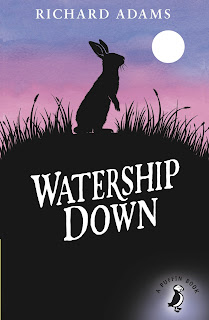
Watership Down


 According to its own author, Watership Down is simply an adventure story told to his own children about rabbits. I, for one, don't buy it. On one level, it absolutely is that adventure story - and one with heart and soul and spirit - but on another it serves as allegory for totalitarianism, for human spirit, and for those freedoms enjoyed in democracy.

It may surprise you that I hadn't read Watership Down until now; I suppose some would argue that I still haven't. It was my monthly listen on Audible, with Peter Capaldi providing the narration. For a fortnight, between work and home, I listened to the adventures of Hazel, Fiver, Silver, Captain Holly, and - my own favourite - Bigwig, actively hoping for short delays just to listen that little bit longer. For seventeen and a half hours I was engrossed in the tale of a hardy bunch of rabbits forging their new home on Watership Down. And every second was worth it.

A good book for children works for all readers. It works for both child and parent when they read together as a shared experience, and it's possible to admire the skill that goes into its creation. I'd certainly argue that listening to a story like Watership Down makes you feel a child again, but with adult sensibilities. Those things that drift over a child's head are absorbed by the adult, so the literary references, the historical placements, the epigraphs at the beginning of each chapter, and wider social context all find their mark alongside the qualities of the story.

And what a story. On the one hand, we have the rabbits who leave their warren to escape its destruction by men as part of a housing project, attempting to find their own home. They think they find it, only to discover that secrets are being kept by their new hosts, and they set out again to find Watership Down itself. As the new warren comes under threat, the greatest crisis faces the rabbits of the warren in the form of General Woundwort and the dictatorship of the warren of Efrafa.

A child will love the adventure and the characters; an adult will love the adventure and the characters, but on a different level. For this is no simple tale. Interwoven with the main plot is the lore of the rabbits, that of the spiritual El-ahrairah and his adventures, told through tales and legends. The world of the rabbits is so well-realised, the characters so well-drawn, that they are more human than many - perhaps most - characters and tales you'll find elsewhere.

This is Watership Down's greatest strength: the characters. You care for them, and they are real. Not real in the sense of being physically real, but in the sense that they matter. The fact that they are rabbits and not anthropomorphised rabbits actually helps; these aren't rabbits who make their own tools, they do real rabbit things - from eating their own tods to eating their own young. This isn't glossed over, which is to Richard Adams' credit; too many children's books sanitise reality rather than tackle it. One of the reasons Horrible Histories is so popular is because kids don't want to be talked down to about the world, and Watership Down certainly doesn't do that.

But the characters... I find it hard to put into words the quality of the characters. There are no characatures here. What we have are rabbits that have their dominant traits, it's true, but which are never beholden to them. They may normally show good judgement, but they can become prideful and learn from that. They may be able to inspire loyalty, but make mistakes. They may have a set way, but eventually come around to a different way of thinking. And it's this humanity to them that generates so much empathy and sympathy. This is true of every character in the book. Even minor characters firstly play their part, and secondly find themselves being so well fleshed-out that you can't help but support and hope for them. The main antagonist, General Woundwort, is no different; yes, he's mad, yes, he's very much a sociopath, yes, he's a mortal threat, and yet... and yet... He's still so human in his way. Parallels can be drawn between him and every dictator of the twentieth century, every strongman who used violence 'for the greater good', to use a term from another beloved book.

Better commentators than I have linked Efrafa to the dictatorships of the twentieth century - especially notably East Germany and the erection of the Berlin Wall 10 years prior to the publication of Watership Down - but it is worth mentioning. This in spite of the author's own insistence that this is just a book about rabbits. I normally listen to the author and I'm inclined to believe them as they know their own art, but I can't help but think Richard Adams was being coy for the sake of this being a children's book.

Should a very young child read this, or have it read to them? Probably not. But should a child of ten be allowed to experience it? Absolutely. This should be a gateway book to literature. As an adult I regret not reading it when I was younger, only to experience it anew as an adult so I could see both levels of Adams' mastery. As an adult, I absolutely loved what I experienced.