Thursday, 31 August 2023

Final Fantasy VII Remake

 I'm old enough to remember the PlayStation 3 technical demo of the original Final Fantasy VII opening. I'm old enough to remember the original Final Fantasy VII coming out. Crikey, I'm old enough to remember people at my primary school playing it and reporting back that actually, yes, this is very good, even if it looks like it was sponsored by Megablocks. It was, after all, 1997, and the glow-up the introduction received in 2005 simply rendered existing content into something that looked more palatable to an audience that wasn't going to put up with old-fashioned early pixel character models. I mean...

Fast-forward 26 years and I've finally completed the first part of the Final Fantasy VII remake, originally titled Final Fantasy VII Remake. It seemed a good time. With Rebirth on the way it was about time I tied off the loose ends of a narrative that perhaps didn't do anything to shock, but did plenty to thrill.

I'm pleased to report those late-1990s character models are gone. Final Fantasy VII Remake is a graphical and technical marvel that pushes the PlayStation 4 to its limits. Midgar never looked so good. Well, Midgar never looked good - the whole idea is that it's an industrial hellscape ruled and ruined by one corporate entity, like Saltaire gone wrong - but the slums under the plates of the city in the sky have been given an incredible glow-up. The environments are sensationally produced. There's a sense of finally realising a vision in the environments and designs. No longer do we see the limitations of pre-rendered backgrounds (no matter how much I remain in love with such retro concepts); instead, we get this:


That's gameplay footage, from chapter 15. The world of Midgar, the city of Shinra, feels so real and immersive it's possible to get lost in it.

Which leads neatly to what will immerse many people: the plot. The narrative. The story.

The Shinra Electric Power Company is draining the planet of its mako energy. Eco-warriors/terrorists Avalanche contract with former Shinra SOLDIER operative, the mercenary Cloud Strife, to make strikes upon the mako reactors that produce energy at the cost of the planet's life. The cast of characters is that of the 1997 original. Barret Wallace, the gruff and good-hearted leader of the band. Tifa Lockheart, Cloud's childhood friend and martial arts expert. Eventually, circumstances lead to them being joined by Aerith Gainsborough and, at the very end, Red XIII, who sadly isn't playable. That decision does make sense; introducing another playable character about 5 hours from the end of a 40-hour game, who would need new mechanics and options, would have been a technical challenge to the producers and likely to break the player from their finely-balanced battle tactics.

The game focuses on the first quarter or so of the original; there is nothing beyond Midgar in this first instalment of a likely three. The game ends with the ragtag band of heroes leaving Midgar behind them, to strike their way across the world. That isn't to say later events aren't referenced - foreshadowing plays a huge, perhaps onerous, part in the narrative - but the scope of the game is restricted.

What this does mean is a narrative focus that investigates Midgar and its denizens far more. Don Corneo, for instance, plays a more significant part in the game. As do Avalanche operatives Biggs, Wedge, and Jessie, who feature as minor players in the first 4 hours or so of the original but who here get fully fleshed-out characters and backstories. There's an added complexity which augments the original storyline in many respects.

The downside of this is that sometimes the additions to the story just don't work. A 2-hour quest to Jessie's parents is just one of several examples of unnecessary sidetracks to the main quest. Yes, there's a boss battle at the end of it, but what was the point? To show Shinra up as the bad guy? It goes nowhere and adds nothing. It is filler.

That being said, most of the additions add something. Take, for example, the climb from Wall Market to the Shinra building which comprises chapter 15. For the most part, it is pure gameplay, but then there are moments of poignant reflection. The destruction of the Sector 7 plate is brought home as you first walk through the topside parts of the plate, then climb to see the scale of destruction. The arbitrary cruelty of Shinra is brought home in a far more effective way than in the original. Plus, thanks to the well-balanced action RPG gameplay, you're always moving and always busy.

Then there are the changes to the story. There is one significant change to the story, well-documented elsewhere, which may have huge repercussions. Not least to my ego, as it's just gone through this other part of the backstory of Final Fantasy VII and in some ways feels betrayed, for all the narrative possibilities this opens up. This is, when all's said and done, no longer the comfortable world of 1997; this is a new world of Final Fantasy VII that could do things we just haven't seen before.

A special word for the gameplay. To complete the game, you'll spend about 35 hours with a controller in your hands; it has to engage and grip, and, for the most part it does.  Action RPGs aren't my thing, not when compared to old-fashioned turn-based games, but Final Fantasy VII Remake balances the two well. It emphasises action and forces you into quick-paced battles requiring tactical thought and positive activity. You have to attack to build the ATB gauge, allowing you to perform other actions; it takes some getting used to, and it's not a choice I would have made as if you are hard-pressed in a battle you can find it impossible to find your footing. Of course, this is offset by making the right choices in equipment and materia; making those choices well can make your life easier, without breaking the game. The risk the game runs is always going a little too far; battles, although fast-paced and riddled with decisions, have a tendency to linger for too long as basic attacks only do so much and the ATB issue leads to battles being dragged out.

There are truly epic battles to enjoy. The Airburster boss battle stands out, not least because it is fought against a background of a heavy symphonic metal remix of 'Those Who Fight Further', the original boss battle theme. Meanwhile, the Blade Runner aesthetic of the setting, complete with the holographic head of President Shinra himself, lends something to this particular highlight of the game. Players looking for those epic fights, combining tactical nous with brute strength, will not be disappointed, even if the common battles can become a little repetitive.

There's much to recommend in Final Fantasy VII Remake. Players of the original, like myself, will enjoy the sense of nostalgia and, yes, fanservice. Memorable moments are reproduced. Yes, Cloud dressing up as a young woman is still intact and as ridiculous as ever, even if thankfully many of the attitudes from the original are replaced by a more modern sensibility. Yes, the chase after escaping from the Shinra building is there and fully-playable. And yes, there is that 'ooomph' moment at the very outset. But there's also much here for the newcomer. There's a sense that this is a new beginning.

Thursday, 8 June 2023

The Places in Between

 In his afterword, Rory Stewart explains the odd afterlife his 2001-2 walk through central Afghanistan has undergone. It has become a comment on a moment in time, between the rule of the Taliban and NATO's attempts to impose liberal democracy on what the West regularly terms a failed state. Stewart himself is unequivocal: this was not his aim. He simply wanted to walk across Afghanistan.

An odd goal, perhaps, given the dangers involved. It is hard to imagine many places more dangerous than Afghanistan in the weeks after the fall of the Taliban in 2001. What structures there had been had collapsed. A power vacuum existed, being filled by tribal leaders and traditional village leadership. The legacy of a decade and a half of invasions, power shifts and failed initiatives, going up to the post-9/11 invasion of Afghanistan.

Once again, that's what the Western narrative would suggest. And it is hard to read Rory Stewart's book without using Western eyes, sensible to the rule of law and sense of shared, common identity. Afghanistan, viewed through those eyes, does appear to be a failed state. But that, as every person Stewart met showed, is viewing Afghanistan as a geo-political problem and not necessarily a social one.

The Afghanistan Stewart walked through is one quite probably very similar to one that exists today, in the aftermath of the disastrous Western withdrawal in 2021. The Taliban continue to be zealots who vandalise the cultural heritage of this place in between; in between the Persian world of Iran and the structured Islamic world of Pakistan. Local justice - often based on Sharia law - is still dispensed under trees by village headmen rather than through a formalised court system. Viewed in such a light, Afghanistan is not a country that we would recognise as a nation state.

But that's the beauty of this astonishing book. Those places in between - the villages of central Afghanistan, in the mountain passes, where UN advisors and international experts were told it was too dangerous to travel - are Afghanistan. I would not want to go travelling there myself; today, as in 2001, it is simply too dangerous for someone unprepared. But it is in those places that millions of Afghans live, in villages that still work within a feudal system. Afghanistan isn't a Western democracy; it is a place of its own that the West has fundamentally misunderstood in two decades of foreign policy failure.

But that wasn't the point of the book. The point was the people. From the security escorts provided to Stewart in the early legs of his six-week walk, to the headmen he met, Afghanistan teems with complex humanity. It is those individuals and Stewart's interactions with them that form the basis of the book. It is fundamentally a travel book, interlaced with the history of Afghanistan. Every person he met on his journey he met on organic terms, not those imposed by some international treaty or agreement. Stewart saw villages and their social structures in operation. He met the kind, the cruel, the honest, the vindictive, the decent, the hospitable, the xenophobic and all other types in the human tapestry. He stayed on mosque floors and ate the bread of hospitality. And that is the backbone of this book: humanity.

Stewart doesn't always emerge to his credit - there are times when he is almost stereotypically the Brit abroad, domineering, abrasive, and stubborn - but in hindsight it's clear that he learned at every step, whether dealing with his security detail or with former Taliban commanders. He learned the country in a way few could do without spending weeks immersed in its people and landscapes. His affection for the place, despite its dangers, shines through. There are times when Afghanistan's beauty is able to shine; sadly, these times tend to be when he discusses the rich history of Afghanistan or its unforgiving geography, and not the very human problems that have dogged the place for centuries.

The Places in Between will live with me for a long time. In places poignant, in others brutal and unflinching, it is a book that touches on the entirety of human experience on the fringes of Western understanding. It is hard to read it without feeling something of the pity that exists in such a place.

Friday, 2 June 2023

The Prime Ministers


 Iain Dale's book has a major problem. In providing profiles of 55 men and women who have held the office of Prime Minister (or First Lord of the Treasury), there's something missing. To be specific, the latest incumbents of the office. As up-to-date as the book is, being published only in mid-2022, events of mid- to late-2022 are missing. So no Truss. No Sunak. Anyone hoping for anything more recent than covid will find themselves sadly disappointed.

Such have events been. No longer is George Canning, ailing at his accession to office, the shortest-serving PM. At least Iain McLeod holds his record at the shortest-serving Chancellor of the Exchequer, even if it's because he sadly died just 30 days into the job - rather than spending October crashing the economy on a mad, ideologically-driven 'dash for growth' that was doomed to failure necessitating removal from office to the backbenches.

At least for 54 of the 55 PMs there is an up-to-date analysis of their achievements and failures in office. Even then, Dale's own analysis of then-premier Boris Johnson - and how long does it feel since that could be said? - rings true. The personal charms of Johnson do not outweigh the fact that, even before Partygate and resignation scandals, his political achievements were limited to bikes on loan while he was Mayor of London. Dale reserves judgment, but places Johnson squarely in the bottom half of the league table of Prime Ministers; there's even the caveat that he could rank lower.

Recent history is where this collection of biographical essays excels. Historians, politicians, and journalists contribute one essay each to outline the achievements of the men who, since Robert Walpole, have assumed the mantle of political leadership. From the mid-nineteenth century on, as politics assumed its modern shape and the constitution settled into something reconisable, with familiar parties and conventions, the writing becomes stronger. The judgments made by the authors - if coloured by partisanship and personal inclinations - hold true in the light of ideas in 2023. Particular highlights include Rachel Reeves writing on Harold Wilson, the essay on Herbert Asquith, and Adam Boulton's fine judgment on David Cameron's tuneless leadership.

At its strongest, the book puts to one side the political ideas of the authors and provides a dispassionate and compelling overview of the development of the office and achievements of its holders. This is something that, despite the stronger second half, the first half also achieves. But it is this overview which holds back the book. This is inevitable; 300 years and 55 men and women are covered in 508 pages. Each essay can only ever be a summary; much will be missed. Going to Harold Wilson, having recently read a 500-page biography on him alone it is something of a shock to see his premierships distilled into 10 pages, little over 4,000 words.

This is particularly a problem for controversial PMs who made great achievements, particularly in the modern age. Henry Campbell-Bannerman and Herbert Asquith are limited, between them, to fewer than 20 pages despite being the achitects of modern social structures and the beginnings of the welfare state, with its move away from laissez-faire government. David Cameron, who achieved the square root of nothing beyond sticking parts of his appendage in dead farmyard animals (allegedly), gets ten pages, just a couple fewer than William Pitt the Younger and significantly more than Earl Grey, who began the process of democratisation - not that he would recognise it as such. This is most obviously problematic with Thatcher; fourteen pages is nowhere near enough time for a proper assessment of her leadership style, her achievements, her failures, and her impact both in the short- and long-term. The result is an unbalanced essay, focusing as much on Thatcher's personality and not her rearrangement of the British economy; even the miner's strike barely warrants a mention.

Although most contributors retain some semblance of balance, there are exceptions. Criticisms of the 1945-51 Labour government's open cast mining policy crop up in a discussion of the mid-eighteenth century Duke of Newcastle, despite having no relevance to the point being made. Most PMs escape truly scathing criticism, even when they bore responsibility for significant failures in foreign or domestic policy. Nobody is held responsible for the Great Famine in Ireland for instance - another major event conveniently skated over by multiple authors. There's little discussion of imperial policy; perhaps because it could be an entire series of books in itself, but when considering several hundred years of history it seems a glaring oversight. From a history teaching standpoint, the book provides a goldmine of interpretations.

The other major problem - again, inevitable in a volume of this nature - is the inconsistency of the writing. Some essays provide excellent writing alongside skilfully woven analysis. Others, less so. These tend to be the co-opted politicians, those who are intelligent and know their subject, but who do not have the experience of writing for anything other than a political audience. Most essays are at least readable, but there's a special place in literary hell for Nicky Morgan after her appalling excuse for an essay on Lord North. Less an essay, more a bullet-pointed chronology of events, she manages to somehow overlook the key point of his premiership, whether or not he was to blame for this: the loss of the Thirteen Colonies and its impact on both Britain and the wider world. And that is without mentioning the fact that the writing in that essay is utterly abominable. 'In 1779... By October 1779... In 1780...' It would be an insult to an A Level student to describe it as a 17-year-old's standard of writing; I'd back my students to write something better, given the subject material. It must be her drive for an improvement of literary standards that makes me say that.

To sum up The Prime Ministers is a tough ask. As a primer for British political history, it serves a purpose. Its inconsistency is problematic, and a reader needs some knowledge of British politcal history to be able to analyse each essay and its author; itself a problem for those seeking instruction. But I can recommend it, with the caveats above. It is far from authoritative - and to be fair it doesn't seek to be - but it has proven useful in filling in certain knowledge gaps, particularly in the tricky nineteenth century.

Thursday, 16 February 2023

Femina

You may know Janina Ramirez from the TV. She's presented plenty of documentaries on the BBC, not least the excellent Raiders of the Lost Past, where she riffs off Indiana Jones to place historical discoveries within their wider historiographical context. She's also a Cambridge professor, an art historian who regularly appears on podcasts like You're Dead to Me, and who, while taking history seriously, doesn't take herself too seriously. We need more of Janina Ramirez.

You may be less aware of her publishing credits. Not too long ago, I enjoyed The Private Lives of the Saints, which tackled issues of Anglo-Saxon faith and belief in an increasingly politically complex world. And her newest work, Femina, has moved on from there. It's a challenging work, which brings medieval scholarship up to the modern day. When someone is asking why is medieval history relevant to our world today, there's nothing more you can do than point the questioner in the direction of Femina.

Telling the story of women written out of history owing to their position as women, Femina sheds new light on the Middle Ages. What becomes clear quickly is that the women written out of history have been written out by historians; they were appreciated and admired in their own time and in their own place. We have the Loftus Princess, unknown to us but venerated by the people she lived cheek by jowl with. We hear of Jadwiga, Europe's only (successful) female king, whose legacy was a united Poland and the final pagan bastion of Europe conquered by Catholicism. We meet Margaery Kempe, a merchant and sage of King's Lynn, and a woman of the world.

The Church runs as a theme throughout, as is to be expected. Whether it's the dawn of Catholocism in England, monasteries in the south east or Germany, Crusades in Lithuania, or accusations of heresy through either the Cathars or Lollardy, we see the extent to which the power of the Church was influenced by and exerted control over the women of the Middle Ages. But women aren't subservient. We hear their authentic voices from their own accounts, particularly from women like Margaery Kempe who have their stories recorded through documents that have survived the centuries.

What has to be said, and this is a problem that fundamentally exists with history itself, is that the 'untold stories' have already been told. Individually, and in unknown documents, it is true; perhaps never put together thematically and as a part of a bigger story. But the fact remains: we do not know about other women. We can only extrapolate from what we know of these women, who tend to be more powerful due to the issues of recorded history. It's also true that we get the chance to dig in to the archaeology, which gives more of a voice to the voiceless, but we don't really get to know about individuals unless they already have a voice.

What Femina does, though, is correct the historical record in relation to the influence of those women. Although they have had voices heard and researched, they have been sidelined to allow for the power-plays of men to take centre stage. This is what Femina corrects. This is a narrative interwoven with what we know. It doesn't act as a complete rewriting of history, but it does challenge existing social and political power structures in relation to the experience of women in the Middle Ages.

Something else Femina does is bring the Middle Ages into the twenty-first century. The final chapter in particular corrects narratives that have been allowed to settle into historical debate unchallenged for far too long. Two examples help to challenge the white cis male power structures. The ideas of transsexuality and race are placed in a wider context. What is clear is that these are not issues that began in the twentieth century. Of particular importance right now is the issue of gender identity. Medieval people had their ideas, and we should not impose modern ideas on, for instance, the fourteenth century, but in the case of a non-cis individual arrested for prostitution with a man, challenges are made to the way we think of gender identity and the way medieval people thought of it. Although physically a man, the person involved was acting as a woman. Prostitution was something only a woman could do, according to medieval sensibilities, but sodomy was a thing only a man could engage in. It was a challenge to established ideas and we should not kid ourselves that the trans debate (such as it is; for me, just accept people without being a prat is a fair way forward) is anything truly new. This is history as current affairs, and it provides a thought-provoking counter to much contemporary debate.

We also see a black woman of African origin, dying in London during the height of the Black Death. The Empire Windrush was never the first example of people of colour coming into Britain, despite what certain narratives would have us believe. Miranda Kaufman's Black Tudors was an excellent counterweight to conventional (and incorrect) narratives, but Femina plays its part in widening the historical debate still further. London, recent research has shown, would have been just as diverse in the 1340s as it is today.

Whether Femina quite manages its ambitious aims is open to some debate. But debate is what it wants you to do. It wants you to question your vision of the past. It will challenge you. It accepts its biases (one for the year 7s there) and makes its case strongly. Whether you've heard of Janina Ramirez or not - and if you haven't, I pity you for missing out on one of the most enthusiastic medievalists out there - this is a book well worthy of your time.

Sunday, 29 January 2023

The Age of Madness

Say this for Joe Abercrombie: he tests himself.

Say this for Joe Abercrombie: he tests his reader.

Say this final thing for Joe Abercrombie: he's never dull.

Fantasy is all too often about preservation of the status quo. There is something inherently conservative about it in that sense. Pared down to its bare bones - and more of those later - pastoral good defeats industrial evil. JRR Tolkein has much to answer for in that sense. Modern fantasy has started to make moves away from this, but change - fundamental societal and technological change - hasn't really been tackled. Even the best modern fantasy - I'm looking at you, Winnowing Flame trilogy - harks back to preservation over progress.

There are, of course, exceptions. And, of course, Joe Abercrombie marks himself out as one of them. The self-appointed (with good reason, it should be said) Lord Grimdark has always challenged traditional fantasy tropes. In the bloody vanguard of the grimdark movement thanks to the First Law trilogy and its associated standalone novels, he has never been afraid to tackle fantasy conventions head-on. You root for the morally grey - or, in the case of the Bloody Nine himself, the out and out black and evil - in a world of questionable morals. Flaws are inherent in his characters. Idealism be hanged; sometimes literally. This is a world that doesn't dress itself up as perfect.

And, when all is said and done, why would you want to preserve a world like this? This is a world where the central nation, the Union, operates under an anti-democratic closed council. Opponents to the oppressive regime are persued by a secret police that uses the most brutal methods possible to preserve (that word again) power for the ruling few. What could be testing for the reader is how dark it can get. This is a violent world. TV Tropes actively describes it, in an understatement, as a crapsack world that actively makes decent people worse. No wonder the people in it hanker after a Great Change.

Abercrombie's writing ranks amongst the best the genre has to offer. This is a dark, depressing world, but it's leavened with humour - often black - that offers respite. We see regular use of catchphrases to build character. Characters' dialogue feels organic. The world-building is consistently superb, particularly as we see the reinvention of an established world. The writing is sharp and focused, with hardly a wasted world. For no other reason, every fantasy fan and writer should make sure they read at least one of his later novels.

If you're looking for pace, then perhaps the Age of Madness isn't the best place to start with Abercrombie's work. My own preference is for the relentless rhythm and power of the Shattered Sea trilogy when it comes to a relentless narrative thrust. And if you're looking for real focus in the characters, the First Law standalone Best Served Cold offers more. But if you want challenge, and ideas, and invention, the best thing to read is undoubtedly the Age of Madness, the third (second? Does a trilogy of standalone novels count as a trilogy?) trilogy in the First Law world.

Change has been in the offing before. Political consequences have always been inherent within the world. Civilisations rise and fall. But most importantly: things move on. Red Country, the final standalone after the First Law, laid the foundations for a revolution. An Industrial Revolution.

And that is where we pick up. Time has moved on since the first trilogy, as we return in earnest to Adua, capital of the Union, for the first time since Bayaz, First of the Magi, destroyed the Agriont to preserve his political experiment. Thirty or so years have passed. King Jezal, put on the throne by Bayaz himself, is nearing the end of his life, his hedonist delinquent son Orso completely unsuited to rule, while the Closed Council continues to rule with an iron fist. In many regards, this is familiar territory. Unchanging fantasy.

But wait. Those changes in Red Country - itself a pastiche of the western genre - are being felt in Adua. The chimneys of industry rise. We hear of canals and capitalism run amok. Iron rails begin to stretch out of Adua, snaking into the Union itself. Investments by the rich are offset by ruthless exploitation of the poor. Simplified, we see the exploitation of the working class through predictably brutal methods.

It is in this world that we see a collection of interesting - and inevitably flawed - characters. Savine dan Glokta, the ruthless daughter of Sand dan Glokta from the first trilogy, is an amoral investor, a manipulator of men, and noted beauty. At the start of the trilogy, she is engaged in an illicit - and inevitably explicit - affair with Prince Orso. Across the sea, in the North, we find Rikke, the Dogman's daughter, blessed, or maybe cursed, with visions of the future. We also find Leo dan Brock, the Young Lion, the closest we find to a hero at the very start of the series.

If that all sounds safe and easy, rest assured it doesn't stay that way as we navigate a fantasy Industrial Revolution and all it entails. I have missed out many characters who are met during the 1,700 pages or so of the trilogy, and it is these characters who offer much of the moral complexity of Abercrombie's writing. These characters mean it is never short of compelling.

And never short of challenging. Change is inherent in what Abercrombie tries to do. This is the work of a writer unafraid of stetching what is possible within the genre. We see many normal low fantasy traits - we have battles, rebellions, plenty of politicking - but we also see a Great Change akin to the French Revolution. Ideas leap off the page, and the extent to which Abercrombie tests the conventions of fantasy becomes apparent the more we progress.

Perhaps it is inevitable in a series of books this wide-ranging and dense. When I say hardly a word is wasted, this is one of the most tightly-written series you'll come across. In a less masterful writer's hands, the books could easily have been twice the length. What it does mean is that unless you're paying full attention, key moments can be missed. It also meant that at times it feels like the Age of Madness is trying to do too much.

That being said, it's always better to stretch both reader and writer than it is to stick with what is safe and secure. And although some aspects of the Age of Madness don't quite land, one way or another, it is still one of the most significant works in modern fantasy. It is a series fundamentally about change, and about people in that change, and it takes fantasy into - if not uncharted territory - territory that has hardly been explored before. On the fringes of the map we see the cartography of a modern master.

Say this for Joe Abercrombie: he's worth a read.

Sunday, 15 January 2023

Too Like the Lightning

Imagine, reader, that you are the perpetrator of the worst mass murder seen in a utopian society for many years. Imagine that rather than face the ultimate penalty the rest of your days are spent in perpetual penance but in secret, as your very identity poses a risk to your safety. Imagine that you are the one man - or woman, for sex is no hindrance to this - able to balance economies and realities and that you live, almost paradoxically, in a private hive home, surrounded by the humanist and the utopian. The broken and the damned surround you and power flexes itself around you at all times.

Congratulations, reader, for you have placed yourself in the realms of Too Like the Lightning, Ada Palmer's philisophical 2016 science fiction novel. It is a novel of contradictions, set in a world completely alien to our own 21st century sensibilities.

And perhaps it is that which meant I could not finish it.

This is a strange novel. Not just for its content, which, as I have already said, feels completely out of the realms of the modern man's - or woman's  - experience. But also for its style. Its plot. Its philosophy. This is a novel that can completely alienate the reader, such as yourself, dear reader, if you do not understand its minutiae.

I did not read the novel, it should be said. I listened to it. For twenty hours, my listening was confused and somewhat lost. My questions outweighed my answers. At times, I completely lost track of what was going on. Snippets of sense emerged, but they were few and far between. Despite this, I persevered; it takes something else to defeat me in a quest to read a book such as this.

This curious mix of Thomas More and Frank Herbert (alongside the Marquis De Sade - this is the one thing I wish I was kidding about) attempts to combine future economics and politics with the unbelievable elements of a boy who can animate the inanimate. It is ambitious. It is beautifully written. It also incorporates elements of gender theory - about the only thing I understood - with eighteenth century writing style.

If I have lost you in this review, reader, I apologise. You are my master in this and I should not have let you down. But this emulation of the written style does not include how unreliable Mycroft, our first person narrator, is. Or does it? Certainly this is a pale imitation of it, bereft of many of the ideosyncracies that actually made the style interesting to listen to even when it was impenetrable.

I did not enjoy Too Like the Lightning, but I do not regret having read it. Perhaps this is a book to be pored over rather than listened to - in the car, no less, dear reader. It may be a book that rewards the tooth-combing reader who can understand the philosophy and the seemingly plotless nature of the novel. I cannot make a judgement for you, though, dear reader, and I would encourage you to form your own judgement rather than rely on my unreliable perspective.

Sunday, 1 January 2023

The Year of the Word

Each year begins with a challenge to myself. Read more women. Read more from around the globe. Read a particular series. Simply read. The challenge depends on how the year looks in prospect. The decision to get an Audible account made all challenges significantly easier, it has to be said, but in general reading time has been harder to come by in the past couple of years. Having a family will do that.

So what shall it be this year? Come, come, we haven't got all day to decide. What I choose to entertain myself with shall inform my choice of book.

Last year, it was the year of the classic. Dickens. Elliot. Du Maurier. Austen. Brontë. All featured highly in my year's reading. Dickens in particular found himself a staple of my... well, listening, if you must know the truth, but then Dickens should be listened to rather than simply read. You don't get the tempo of the writing, the organic nature of the dialogue, the sense of knowing characters through rambles and interactions like friends. Were I reading his work I'd probably find it insufferable and unfocused, meandering to an ill-defined conclusion. But listened to, the language sings and provides joy.

So what of this year? This year is not a year for the classics, although Audible having many from the nineteenth century available to listen to for free as part of my membership inevitably means I'll rattle through a few from Hardy, Trollope and others. No, this year is a year for something else: 500 words per day of writing.

It's a change. And yes, I'm cheating already. I'm counting these words as a part of my daily quota, so I have something at stake in making this as rambling as possible. Talking around the issue is, of course, a speciality for Dickens and there's much to be learned from the master of the meander, but I also need to ensure in my writing I have more focus.

500 words a day is hopefully less than an hour each and every day. By the end of the year, it's 182,500 words; two good novels, although I set no targets for what I write, simply the amount. Yes, I want to write certain stories. Yes, there are some things on my to-do list. But what is more important is rediscovering the habit of opening a Word document (or Pages, as it is on my laptop) and getting words on a blank sheet. It's opening a blog to crystallise thoughts - perhaps on writing, perhaps on history, perhaps on politics, perhaps on something completely different - and hold myself to account.

This year, you can expect to hear more from me. And I hope to make it interesting.

Wednesday, 26 October 2022

House of the Drag-on

Pace. I'm told - constantly - that pace is the key to anything. No more so than in narrative. It has to shift, increasing and decreasing as appropriate. The conventional wisdom is to start slow and to build up to a rapid conclusion. John Le Carré was the master of this; just see Tinker Tailor Soldier Spy for confirmation.

House of the Dragon, Sky and HBO's Game of Thrones prequel, needs to learn a lesson when it comes to pacing. And, for that matter, focus. This isn't to criticise too strongly; there are so many elements of House of the Dragon deserving of praise that there are times it is possible to forget issues of pacing, timing, and narrative focus. The problem isn't those times; it's the blank spaces in between. Game of Thrones was more narratively daring, while based on A Song of Ice and Fire, than many other TV series. It was one of the reasons it was successful. The cut and thrust of faux-medieval politics didn't lend itself to a single-thread narrative, and so the ensemble came into its own. Add to that, nobody was safe. There was no guaranteed 'point' to a character or a narrative thread. They could be snuffed out in an instant while having little bearing on the overall plot. Key characters could reach stupid endings, even without bearing the finale in mind. And this was a strength. Unpredictability, a refusal to conform to norms, and a glorious pacing - interspersing realpolitik with action-adventure - led to a compelling watch.

This was the great strength of George R.R. Martin. For those of us who have read more than just A Song of Ice and Fire, we're aware that he doesn't do 'normal'. Fevre Dream, an earlier work of Vampires on the Mississippi, had similar pacing. It wasn't an instant hook, that's true, but it maintained attention, had moments of dread, of fear, and of action that meant it never got dull.

Now compare to House of the Dragon.

King Viserys reigns. Not the hot-headed, borderline insane brother of Daenerys, Mother of Dragons, but his ancestor. A man who had the good fortune to inherit a peaceful kingdom from his predecessor, but who equally inherits the seeds of the dynastic conflict that became known as the Dance of the Dragons. His inheritance over the Princess Rhaenys set a precedent; women cannot inherit the iron throne, so when he bestows the throne upon his daughter, the realm's delight Princess Rhaenyra, he sets up the struggle between his later-born son Aegon and his eldest child.

So far, so good. The initial set-up may be slow, but it creates the intrigue we like, especially with characters like Otto Hightower and his daughter, Alicent. Alicent marries Viserys when his first wife, Aemma, dies in childbirth. Here we see the setting up on factions and the development of relationships and rivalries. We see the fall-out of this internal politicking as it affects the court of Viserys. We see, crucially, how ineffective the good man Viserys is as king.

 I'd be lying if I said early episodes weren't interesting. I'd be lying just as much if I said later ones weren't either. The drama is interesting, it's just... glacial. And after the finale of the first series, who can blame the showrunners for wanting to go slow? It's a welcome return to gradual building and plotting, it just lasts too long. Add to that one of the series' biggest flaws: what happens off-screen. We're told of war in the Stepstones. We even get to see a glimpse of it when Viserys' brother, the scene-stealing Daemon (played by Matt Smith, so that shouldn't be a surprise) pitches up alongside Corlys Velaryon - better known as the Seasnake - to produce a rare early action scene. But we're kept in the dark about its significance and most of the action surrounding it. We never really see the Seasnake's power in action; we're told of it, but when push comes to shove we only see Daemon Targaryen doing things based on the rule of cool. Later we're told of deaths and injuries, but we don't see them. The significance is hidden from us.

To a point this makes sense. The narrative is intended to focus on the court of Viserys and the two rival factions for the throne after he passes, but the overall effect is to render the pacing consistently glacial. Very little feels like it happens. Characters are established, yes, but their wider significance to the Seven Kingdoms isn't made clear. Beyond the central cast, too, characters come and go almost without introductions. Outside Viserys, his wife, his eldest child, his brother and his Hand, everyone feels transitory, entering a tiny world and leaving it again without explanation.

Then there are the jumps in time. The series takes place over the better part of 20 years. We see half a decade skip past at times between episodes. Changes of actors are necessary - and for the most part the newcomer fills the previous incumbent's shoes without a hitch. While fidelity to the source material is laudable, I'm of the view that this has created an unnecessarily jarring situation for a more casual viewer. It's impossible to simply pick up a thread and run with it.

Put all of these issues together, and House of the Dragon is almost disappointing. Almost, but not quite. In and among the criticisms, there are some real nuggets of gold. The narrative direction is, in general, bold. Action, when it does come, is satisfying and serves real purpose; the flip side of keeping the narrative slow and character driven is that when the pace is increased, along with the stakes, it really matters. The showrunners have also learned from some of the big mistakes of Game of Thrones, most notably in the toned-down sex and language.

But at no point is House of the Dragon a comfortable watch. The issues of misogyny from Game of Thrones still exist. No matter the justification that some seem to believe - that misogyny was a medieval staple - there's still no excuse for some of it; if we can believe in dragons, we can tone down some of the dialogue to cancel some of the needless comments of 'whore' and such. Equally, there was a big problem with childbirth in the series; again, I understand the need for fidelity to the source material, and that childbirth was particularly hazardous for women in medieval (or pseudomedieval) society, but was there really a need to show multiple deaths in childbirth and stillbirths? So much went on off-screen that surely some of that could have been moved off-screen. It seemed to be there for a shock factor that was unnecessary. Had the darkness been leavened by humour at some points - something the Tyrion Lannisters of the original series provided - maybe it could have been more bearable, but House of the Dragon made itself almost unrelentingly dark.

Will I return for season two? Yes. For all its failings, House of the Dragon offered a return to form for the Game of Thrones universe and created enough in terms of compelling characters and storylines to keep me engaged. But would I like to see some changes? Absolutely yes. There was little by way of relief, and by the end the pacing was starting to really drag. Thankfully, with the advent of the Dance of the Dragons, more pace is promised next time around.

Saturday, 20 August 2022

Bleak House

For three weeks I have toiled, worked, engaged my senses upon a reading task of mammoth proportions. My experience is that I am the richer for it. At a time when I am reacquainting myself with many classic works, Bleak House has been a task in itself. No faint heart had I in taking the challenge of reading this over a period of time when that very commodity was at a premium. And rewarded I found myself at each turn. Dickens' classic - argued my many to be his best - ostensibly tells the tale of the chancery case of Jarndyce v Jarndyce, a case once about a disputed will now taken over by the question of costs. Its beneficiaries, such as they are, frame the story as the case enters its very latest stages. The matter, it is made clear, was a great one of chancery. The opening chapter spells out most clearly just how murky the waters of the court have become. Nobody seems to know what is truly happening in the case. In true Dickens fashion, the case has descended to farce, with twenty-one barristers in court, some seeming to speak and to never speak again, melting into the wonderfully evocative mists of nineteenth century London. As a lawyer, Bleak House has long been recommended to me. I now see why. Daunted as I was at its prodigious length - running to almost 1,000 densely-printed pages in paperback - it has taken me some twelve years to finally read it since being recommended it as part of a law and literature unit at university. It is a book about law and about its more farcical elements. It is about reform. It is about wider society and Dickens' usual zeal for improvement. At once about nothing and everything, it is regarded by many as one of the greatest novels ever written. I can very much see why. But for that, it is a book of frustrations. Bound by its times while being a novel of social liberalism, we see women damned for children out of wedlock. We see the attitudes of the time both damned and accepted. We see the reformers forced to work within a stringent framework of a society out of touch with the needs of the most desperate. African reformers fail to see the world around them, obsessed as they are by their own projects. And all of this, running as a satirical seam throughout the substance of Bleak House, is what makes Bleak House a great book.

Thursday, 10 March 2022

The Green Bone Saga

Fantasy. Sword and sorcery. Game of Thrones. Wheel of Time. To many, these are synonymous. Fantasy has a particular aesthetic. It must be medieval, western European, feudal. Even games like Skyrim riff heavily off Norse influences. Going further afield, the original formula for Final Fantasy was heavily European in its influences - sword and sorcery, knights in armour, paladins (yes, Final Fantasy IV, I'm looking at you), and so on. Only later did we see a change in the approach taken by the creators, with Final Fantasy VII and VIII being distinctly cyberpunk while retaining many more traditional fantasy elements.

What I've already said is a generalisation, but it holds true in many a case. Recent years have seen a more nuanced approach to fantasy developing. No longer is it exclusively the realm of JRR Tolkien and his disciples. Yes, many settings have remained the same, but narratives have grown away from the McGubbin quest. The genre has been refreshed by the likes of China Miéville, Jen Williams, Joe Abercrombie to name but three leading proponents of modern fantasy. Developments such as magical realism, combined with the influence of mythology outside the Norse standard (Neil Gaiman, do it please ya), outside genres (see: The Dark Tower), and ideas from tabletop (and video) gaming have revitalised a flagging genre. Add to that, we have seen outstanding writers writing truly magnificent multi-trilogy series. Robin Hobb is still the queen of fantasy.

But all of that has been distinctly medieval (at least, if we discount real-world set urban fantasy, which I've traditionally not enjoyed particularly). What has been missing, to really give new ideas, has been a modern world-inspired series that does something different.

Enter Fonda Lee.

"99p? Can't go wrong!"

I can't claim to have known of her before Amazon put Jade City on a 99p daily deal a couple of years back. My thinking was simply: 'it's fantasy, it's 99p, if I don't like it I haven't lost anything.' I've since learned she was an up-and-coming young adult writer with one successful series under her belt, turning her hand to adult fantasy for the first time. Since then, I've been hooked on the Green Bone Saga - Jade City, Jade War, and Jade Legacy - and will be looking for more of her work. Say what you like about Amazon (I normally do) but those 99p deals do work to promote newcomers.

Set in an east Asian-inspired island nation, Kekon, the Green Bone Saga follows one of the two main 'clans' in the country, the No Peak clan. Led by the Kaul family, there are strong overtures of the Godfather in the way the clan operates. Although legitimate and heavily involved in running the country, alongside rival/enemy clan, the Mountain, much of what the No Peaks do is shady. Murder, extortion, smuggling, you name it: it exists alongside the legitimate business side of the clan. There's a military side to the clan, led by the Horn. There's a business side, led by the Weather Man. And at its head there's the Pillar of the clan, Kaul Lan, grandson of a war hero who helped Kekon throw off the chains of Shontar in a previous war.

Uniting the clans is bioreactive jade, a substance that gives its wearers enhanced combat powers, such as the ability to deflect bullets, show super strength, perceive what others think, and (almost inevitably) jump far higher than ordinary individuals. Jade is seen as a Kekonese birthright, its wearers known as green bones, bound by an honour code known as aisho. Other nations want it, but cannot wear it without suffering madness. Even jade-wearers can suffer from its effects, as is seen throughout.

Set over a quarter of a century, the Green Bone Saga is a combination of family story, turf war,

This one wasn't 99p. Worth it though.

international political epic, and cultural reset for fantasy. In around 1,800 pages we see relationships grow, blossom, be snuffed out in an instant. We see rivalries used and subverted. Characters we grow to love are forced into situations we're desperate to see them escape from, knowing that they are not safe. Society changes and morphs in reaction to outside events, and we see how traditions are clung onto and altered in the face of overwhelming pressure.

This is not a series of good and bad, where evil is obvious. I nearly opened this review with the word of Obi-Wan Kenobi: 'Many of the truths we cling to depend greatly on our own point of view.' We root for the Kauls and No Peak in their struggle against the Mountain because we see things from their perspective. We rarely see anything from otherwise. We grow used to seeing Espenians as jadeless outsiders. We dislike the opponents to jade. But when we see glimpses of those alternative perspectives we start to see that they are not bad guys. In fact, several of the characters we're rooting for could be monsters from another point of view. We see the characters we grow to love commit unconscionable actions, and yet we find ourselves almost justifying what they do. In that regard, it's a masterpiece of shades of grey. The justifications - the other side would do it if we didn't, we're protecting ourselves, it's the way it's always been - seem reasonable, but they ask questions of us. What could we justify for ourselves?

Neither is this a series where there's a truly overarching driving plot. Yes, there's an arc from beginning to end, but each character treads their own path within that arc. Sometimes they diverge from the path and disappear for a time. Sometimes they make missteps setting them back. The narrative is not conventional, but it is organic and it is utterly compelling.

Look, just read them.

If the story keeps you turning the page, the depth will keep you hooked. This isn't a conventional western fantasy by a long chalk. Yes, we see western elements - such as Espenia, which stands as a proxy for the USA - but the dominant cultures are inspired by Korea, China, and Hong Kong. In fact, Janloon, the main city of Kekon, reminds me very strongly of Hong Kong in its depictions, its post-colonial status, and its independence. The whole culture of modern east Asia, rich in history and tradition separate from the west, runs as a thick seam throughout the narrative. Clan sensibilities and psychology are based on that way of thinking, and it makes for a refreshing viewpoint. Fonda Lee has used non-western culture to change the whole vibe around her urban fantasy, and I cannot praise her highly enough for it.

This is a magnificently-realised world where modern technology and ideas clash with traditional culture. The characters are wonderfully and lovingly created. It has been a breath of fresh air over the past couple of years to indulge myself in Lee's masterpiece, and it has been an eye-opener as a writer. Every fantasy fan should read this trilogy.

Saturday, 22 January 2022

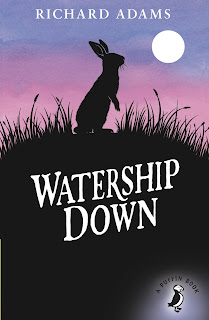
Watership Down


 According to its own author, Watership Down is simply an adventure story told to his own children about rabbits. I, for one, don't buy it. On one level, it absolutely is that adventure story - and one with heart and soul and spirit - but on another it serves as allegory for totalitarianism, for human spirit, and for those freedoms enjoyed in democracy.

It may surprise you that I hadn't read Watership Down until now; I suppose some would argue that I still haven't. It was my monthly listen on Audible, with Peter Capaldi providing the narration. For a fortnight, between work and home, I listened to the adventures of Hazel, Fiver, Silver, Captain Holly, and - my own favourite - Bigwig, actively hoping for short delays just to listen that little bit longer. For seventeen and a half hours I was engrossed in the tale of a hardy bunch of rabbits forging their new home on Watership Down. And every second was worth it.

A good book for children works for all readers. It works for both child and parent when they read together as a shared experience, and it's possible to admire the skill that goes into its creation. I'd certainly argue that listening to a story like Watership Down makes you feel a child again, but with adult sensibilities. Those things that drift over a child's head are absorbed by the adult, so the literary references, the historical placements, the epigraphs at the beginning of each chapter, and wider social context all find their mark alongside the qualities of the story.

And what a story. On the one hand, we have the rabbits who leave their warren to escape its destruction by men as part of a housing project, attempting to find their own home. They think they find it, only to discover that secrets are being kept by their new hosts, and they set out again to find Watership Down itself. As the new warren comes under threat, the greatest crisis faces the rabbits of the warren in the form of General Woundwort and the dictatorship of the warren of Efrafa.

A child will love the adventure and the characters; an adult will love the adventure and the characters, but on a different level. For this is no simple tale. Interwoven with the main plot is the lore of the rabbits, that of the spiritual El-ahrairah and his adventures, told through tales and legends. The world of the rabbits is so well-realised, the characters so well-drawn, that they are more human than many - perhaps most - characters and tales you'll find elsewhere.

This is Watership Down's greatest strength: the characters. You care for them, and they are real. Not real in the sense of being physically real, but in the sense that they matter. The fact that they are rabbits and not anthropomorphised rabbits actually helps; these aren't rabbits who make their own tools, they do real rabbit things - from eating their own tods to eating their own young. This isn't glossed over, which is to Richard Adams' credit; too many children's books sanitise reality rather than tackle it. One of the reasons Horrible Histories is so popular is because kids don't want to be talked down to about the world, and Watership Down certainly doesn't do that.

But the characters... I find it hard to put into words the quality of the characters. There are no characatures here. What we have are rabbits that have their dominant traits, it's true, but which are never beholden to them. They may normally show good judgement, but they can become prideful and learn from that. They may be able to inspire loyalty, but make mistakes. They may have a set way, but eventually come around to a different way of thinking. And it's this humanity to them that generates so much empathy and sympathy. This is true of every character in the book. Even minor characters firstly play their part, and secondly find themselves being so well fleshed-out that you can't help but support and hope for them. The main antagonist, General Woundwort, is no different; yes, he's mad, yes, he's very much a sociopath, yes, he's a mortal threat, and yet... and yet... He's still so human in his way. Parallels can be drawn between him and every dictator of the twentieth century, every strongman who used violence 'for the greater good', to use a term from another beloved book.

Better commentators than I have linked Efrafa to the dictatorships of the twentieth century - especially notably East Germany and the erection of the Berlin Wall 10 years prior to the publication of Watership Down - but it is worth mentioning. This in spite of the author's own insistence that this is just a book about rabbits. I normally listen to the author and I'm inclined to believe them as they know their own art, but I can't help but think Richard Adams was being coy for the sake of this being a children's book.

Should a very young child read this, or have it read to them? Probably not. But should a child of ten be allowed to experience it? Absolutely. This should be a gateway book to literature. As an adult I regret not reading it when I was younger, only to experience it anew as an adult so I could see both levels of Adams' mastery. As an adult, I absolutely loved what I experienced.

Sunday, 11 July 2021

The Interest: How the British Establishment Resisted the Abolition of Slavery

A myth - one of many to do with Britain and her history - exists to do with slavery. Ask a man in the street about it, and they will more often then not proudly proclaim that 'Britain was the first country in the world to outlaw the practice.' What is true is that in 1807 Britain stopped its legal involvement - I hesitate to go as far as to say abolished, considering that other countries continued the trade - in the transatlantic slave trade. A grass-roots campaign, waged over twenty years, resulted in Parliament finally legislating to stop that particular aspect of the horrors of human enslavement.

Another myth exists to do with British involvement in slavery. That myth holds that from 1807 slavery itself was in decline in the British Empire. Once again, were you to ask the average man on the street (or, to use the legal jargon, the man on the Clapham omnibus) they would tell you that slavery declined to nothing, and that this was because of the benevolence of the British state.

The fact that neither of those myths are true would never occur to the average British citizen. That is through no fault of their own.

Recent times have seen the so-called 'culture wars' break out. Pitching what on the outside appears to be traditional orthodoxy, celebrating British achievements in a nationalistic fervour, against a 'woke' revisionism that simply attacks any kind of British achievement, they reached their apogee last summer, as the statue of Edward Colston was upended and pitched head first into Bristol harbour by - depending on which polar opposite view you happen to hold - concerned citizens determined to erase the stains of the past from modern life, or a rabid mob attempting to wipe out history. As for the powers that be, on one hand, we are told that slavery was a great evil and that Britain can be proud of stamping it out; on the other, we're told to respect the statues and monuments built to men who profited from the forced labour of their fellow man. No wonder many people take the simplest and shortest path to understanding, even if that understanding is fundamentally wrong.

As Michael Taylor demonstrates in this excellent book, the British state should take no pride in its role in abolishing slavery itself. Instead, the credit belongs to others: from the grass-roots campaigners in Britain who played a crucial role in twisting arms, to the enslaved men and women themselves who rose up to force the West Indian planters to live in constant fear of those they had incarcerated. The British establishment, for all it now tells us that it gave men and women their liberty, actively conspired against the abolitionish lobby. Only when it was politically expedient did Parliament legislate. And even then, it was only after reform at home.

Yes, many of the protagonists were products of their time. Take the Duke of Wellington. The hero of Waterloo, a decorated soldier, fighting in Britain's interests abroad and a pragmatic politician. He's a man who, if he was learned about in school, would have been learned about for those qualities; there's no reason to doubt them. But if we hold a microscope to him and view his achievements and qualities with modern eyes, we start to see how problematic he was. Yes, he emancipated the Catholics despite being personally opposed, but he was also a supporter of the West India Interest, the cabal of planters who wanted to keep slavery. He was opposed to reform. No democrat, he served the interests of a section of British society; a part, and not the whole. Also take William Gladstone. The Liberal PM of the mid- to late-nineteenth century has a reputation as a great statesman - alongside his unusual nocturnal activities - beloved by many in society. He was certainly more of a democrat than Wellington, and yet his family made its riches as a direct result of slavery. He was a supporter of slavery himself in his early years, when he was more Tory than Liberal. Yes, he may have reformed. Yes, his background may have informed his beliefs. But when you consider that these were the great and the good - the men who held power and refused to release it - it becomes all the more clear that the establishment resisted the ending of slavery.

Even today the establishment is squeamish about its involvement in slavery. There has been no unqualified apology for the evils Britain unleashed on millions of black men and women. In 2015, David Cameron - a relatively enlightened Conservative, as these things go, who had been responsible for the great social revolution of gay marriage, against his party and the Church of England's wishes - failed to make an apology on an official visit to Jamaica. Tony Blair had also failed to do the same. Despite both men acknowledging the evils of the practice, neither was prepared to ask for forgiveness for Britain from the descendants of those it had exploited.

What Michael Taylor exposes is how the British establishment has manipulated the realities of what may fairly be termed a genocide in order to suit its own ends. Despite the fact that it held up the abolition of slavery, we are expected to be proud of the fact that it eventually caved to overwhelming pressure against its own interests, and even then chose to compensate itself rather than those it had exploited, it has somehow turned the abolition into a great British achievement. In truth, abolition was against the interests of those in power until after the Great Reform Act 1832, when Britain underwent a process of democratisation that sidelined the West India Interest.

This is an important book, that serves as a refreshing counterpoint to official narratives. Taylor shows just how abolition was resisted at every step, and only took place when it was no longer in the ruling political class's interests to maintain the status quo. At every step, the institutions of Britain fought to uphold slavery. It's important that we understand this.

Sunday, 24 January 2021

Summer of Night


 By the time you reach the end of a horror novel, all suspense has often been lost. Answers to the puzzle have been provided, and all that remains is the resolution. A good example of this is It, which rumbles along for 1,300 pages of increasing tension and drama, until the end, which resolves loose threads and gives us an ending that, as much as anything, reassures.

I say this not to lambast It - it has become one of my favourite novels, with memorable characters, pulse-pounding drama, a plot that wends this way and that - but to provide a contrast.

Dan Simmons has been someone I've held up as a master of horror for quite some time. If King's books shock and provoke occasional terror, Simmons' books linger and haunt. Song of Kali is like that, and it's like that because, unlike It, it doesn't give us the reassuring conclusion. It speaks to our fears that no, it won't be all right. King does that from time to time: Pet Sematary is just one example of him flipping the expectation that things will be all right on its head. But more often than not the survivors find themselves in a better place. The Stand. It. Even, to an extent, 'Salem's Lot and Misery. Simmons, however, gives us lingering doubt.

Take The Terror. Despite what seems, for a time, to be a cut and dried ending, there's the coda which throws doubt on so much, and lends to the horror from before. The sailors could have been all right. Francis Crozier saved himself, but did he betray his men into the bargain? And as for the Tuunbaq: is it ever really not a threat? Was it real, or spiritual? That uncertainty is as horrifying as any of the violence that went before.

And this is where Summer of Night is so successful. While perhaps not as accomplished or engrossing as It or The Terror - for one thing it's only 600 pages rather than 1,300 or 900 - it still fills the reader with a sense of doubt at the conclusion. This is after the constant dread in the build-up. There is a constant sense of danger. It's a book you can't let your guard down with; after all, if you're alone and you let your guard down, terrible things will happen.

Summer of Night bears comparison with It on a deeper level than 'it's a horror novel'. Like It, Summer of Night follows a group of children in a small American town as they battle a horror through a summer holiday. In this regard, it is arguably the weaker book: there's a bond between the characters in It that never quite seems present in Summer of Night, and the characters, unusually for Simmons, can be a little two-dimensional. On the other hand, the bond that is forged never quite feels safe, and this insecurity just adds to the horror.

Where Summer of Night excels, though, is in the uncertainty. The writing is superb, but at times it is somewhat vague. It sows doubt in the reader's mind. Is this really happening? Where King leaves the reader in little doubt - yes, this is scary, you're right to feel fear - Simmons always has that lingering sense that you could be wrong. Maybe there's nothing to fear. But then again, if there is... Unlike King, there's rarely a sense of catharsis when a threat has disappeared, simply another building tension. There can be no doubt at all that Simmons is a modern master of horror. He makes you feel uncomfortable.

I can highly recommend Summer of Night. Anyone with an interest in horror should read it for its small town America vibes and fears. It is a study in how to write horror, and how to leave the reader in fear and wanting more, even at the end.

One final thing before I depart: If you have not read The Hyperion Cantos by the same author, what are you doing? Your life will be better for it, particularly Hyperion and Fall of Hyperion.

Friday, 1 January 2021

The Reading Year 2021

2020 was a year. I got married. My wife and I found out we are having a baby. I suffered throughout from chronic depression. The world was locked down. At some point, I might have breathed.

Perhaps it's unsurprising, then, that I read more than normal. Time was one commodity that did exist in the first half of the year, moreso than in other years. In total, I completed 100 books, many of which were towards my personal target of reading more books either by people of colour, or about different cultures around the world. If you can't go out and experience the wider world, the least you can do is understand the experiences of others.

2021 is starting with something similar: A Corner of a Foreign Field is a book on cricket in India. But that isn't all: it's a book about Indian social and political history since about 1850. It's another book to help me understand another culture - or, I should probably be honest about this, about the many different cultures of India. Let's remember, the modern nation of India is a product of a colonial past, far more than it would have been if let to its own devices.

India promises to feature heavily in this year's reading. For Christmas, my wife bought me William Dalrymple's The Anarchy, a history of the East India Company and its corporate colonisation of the subcontinent. I also intend to read Michael Wood's The Story of India. A few new ideas will keep me going.

But other than that, do I intend to set targets? Not really. Setting myself targets, partly for my own self-improvement, probably puts me under more pressure than I strictly speaking need to put on myself. My only target is this:

ENJOY WHAT I READ.

This means a return to science fiction. This means completing those series which have been sat on the Kindle for months, or (in some cases) years (perhaps that means the Joe Abercrombie sitting in the background). It means reading Ann Leckie, Adrian Tchaikovsky, RJ Barker. It means returning to old faithfuls after years away. It means Foundation and The Farseer Trilogy. It means revisiting the Norman Conquest and spending time in Anglo-Saxon England.

Life is too short to read things I don't enjoy. May 2021 bring enjoyment.

Tuesday, 29 December 2020

The King in the North

 Sometimes a student will ask me what the point of history is. Normally, they'll be being a pain - and deliberately so - and they get a quick one-liner back. Sometimes, they'll be serious. History doesn't play a part in their life; they live in a present dictated by immediate need and want. Mum and dad work jobs that don't require an understanding of the past. It's the future that matters, not the past, surely?

I admit, this is a question I sometimes struggle with. No such struggle exists with my other specialism: law is the fabric that binds our society and manages acceptable behaviours. It imposes both obligations and entitlements. You study law to understand those rules and regulations, to understand how society can come to define itself by its values. You study it to understand the institutions of politics and power. You study it to reach an informed viewpoint on the absolute mess the government has made this week. It is easy to define law as the now, rather than the then. These are the rules, these are how and why they exist, this is what it means for you.

And then sometimes you read something that reminds you exactly why history is relevant, and exactly why every person should understand it. Max Adams' The King in the North is such a book.

'Hang on,' I hear you cry, 'this is a book about the seventh century AD. Surely it cannot contain anything of relevance to a world in the twenty-first? This is a time when England didn't even exist, except as a series of warring kingdoms where some of the greater kings competed for primacy for a spell. Christianity was on the fringes of people's understanding. How can such a book and such a time hold any kind of insight into modern problems?'

Oh, ye of little faith. A lesson in history is not a lesson just in fables and moral lessons; it never has been. History (somewhat ironically) teaches us that. It isn't a lesson in good triumphing over evil, of absolutism that can give us a good sit down and talking to in relation to just what Oswiu did in 658 that we need to carry forward in life - it certainly doesn't help us to become a hairdresser (as one of my students proudly proclaimed a few weeks ago). And no: we don't become a better person for knowing that there was a royal foundation at Dewsbury that was burned down, rebuilt, and then burned down again (although there are some who would claim some kind of grandeur by association - these people are idiots).

What we get is an understanding. We are citizens. We are expected to play an active role in our society - that society governed by the law that is so easy to define - and to do this we must understand both the rules and regulations that dictate our onw behaviours, but also understand how these rules and regulations came to be and to understand the values of our nation and the influences over them, as well as the interests of our nation, our class, and those around us based on the past.

And it doesn't stop there. History is about understanding motivation. And this is something Max Adams does brilliantly. The seventh century is not a time blessed with a deluge of primary sources; what little exists to illuminate the lives of those who lived then must be floodlit by cross-reference with archaeology, geography, deduction and, at times, good old-fashioned supposition. This is a book that reminds us of something: while the historical and geographical contexts change, basic human psychology and motivation does not.

It is because of this that, despite the lack of sources beyond the Venerable Bede (who is leaned on to such an extent it's a wonder The Ecclesiastical History doesn't break except where needed), the Anglo-Saxon Chronicle and the Annals of Ulster, Adams has been able to craft a remarkable history. Bede is dissected (or, at least, his most famous work is; it's quite clear in the book that the only people being dissected are Oswald, the titular king in the north himself, and Saint Cuthbert, along with hundreds of nameless Northumbrian, Mercian and Anglian warriors of the Dark Ages) and analysed, his motivations in his narrative unpicked and compared to other, less well-known narratives. He is placed in the context of the clash between British and Roman Christianity, along with his geographical and historical location in the ancient Anglo-Saxon kingdom of Northumbria. What comes from this judicious and critical use of sources is a truly wonderful work of history of relevance to us today, not only as a work of scholarship but as a reminder that Britain does not stand alone.

It's an odd lesson to take from the narrative of a king who reigned for only eight years, and that before the near-legendary Synod of Whitby. He reigned over only a small (relatively, at any rate) section of what is now England. Although Oswald became an overlord of other British kings to an extent, his overlordship crumbled on his death; it was his brother, Oswiu, who secured Oswald's legacy. What must be remembered is that Oswald was more than just his life, and this is brought home by Adams, who spends perhaps four chapters in total of the twenty in the book on the life of his subject. There is far more dedicated to the legacy of Oswald and the far-reaching influence that he had.

Born in around 604, Oswald was a scion of one of the habitual ruling houses of Bernicia, the more northerly of the two kingdoms that would later become Northumbria. His early life is obscure, but we do know that he was in exile in what is now western Scotland, at Iona, following the death of his father in battle and the assumption of the throne of the first Northumbrian Christian monarch, Edwin. As much time is spent on Edwin as Oswald, and with good reason: Edwin was at least as influential as Oswald in normalising Christianity. Perhaps without Edwin, there would have been no lasting Christian influence, no opportunity for Oswald to lay the foundations of the monastery on Lindisfarne (although, given Oswald's own Irish Christianity, I'd say that's pretty unlikely considering that Oswald's Christianity was more than the politically expedient skin-deep version worn by Edwin). What is certainly the case is that Edwin's rule laid the foundations for Oswald's, with only a brief diversion into paganism in between the two rulers after Edwin's defeat at the hands of Mercia in 632.

Adams paints the picture of the life of Oswald with consummate skill. This is no dry read; it is an absorbing book, written by a master of balance. Discussion of sources is lively and erudite. Human details are fleshed out with real insight into human nature and historical context. There are times when events and locations are obscured by the paucity of sources and Adams has to stray into supposition, but this only serves to enhance the book, just as the frequent diversions into descriptions of the landscape of Oswald's world add to the experience. It's a rare book that can have me referring to OS maps while reading, to get a real idea of the geography of events and to back up Adams' arguments. The use of modern landmarks also does nothing to detract from the history; these were real events that happened in real, identifiable (well, for the most part) places that remain unaltered, with the exception of the odd A road. The history of 1300 years ago is closer than we think.

The final thing that becomes clearer and clearer is the growth and interconnectedness of the world of ancient Northumbria. We can look at the obvious to start with: the union of Northumbria, as forged by Edwin, Oswald and Oswiu over the space of half a century or more created the first power of Anglo-Saxon England, before the primacy of Mercia in the eighth century, the conquest of the Vikings and the subsequent primacy of Wessex from the ninth century onwards. But this is more than just a local tale: Oswald received his education in the monastery at Iona, before earning his reputation in charge of a warband in Scotland. He became overlord of places as far afield as Anglesea and the Isle of Man. His death was on a battlefield a long way from his homeland, quite possibly in Wales, at Oswestry. In his lifetime trading networks continued to develop, shown by the suffix wic that can be found in places like Ipswich, Alnwick and other modern towns. These trading posts, impromptu since the fall of Rome, became more permanent, particularly around the coast as the North Sea Basin became more and more crucial to trade between continent and island.

This interconnectedness finds its most compelling evidence in the growth and consolidation of Christianity. We see the growing influence of the Roman Church. We see how the British Christians become more isolated, playing an at-best secondary role to the increasing rivalry between Irish and Roman Churches following the mission of Augustine in 597. We see the last hurrah - in this epoch, at least - of British paganism in the form of the Mercian Penda. And finally and most tellingly, we see how expedience leads to the Synod of Whitby and the political acceptance of the primacy of Rome over the Church of Ireland and the sidelining of the parochial in favour of the international. The arguments produced by Bede - in the early eighth century - could be applied to the twenty-first century almost without changing the wording. A small world, therefore, became larger and more enlightened by what can only be referred to as global connections. Oswald himself took on a European character after his death, with his martyrdom on the battlefield leading to a cult that took root as far afield as Switzerland.

I was engrossed and delighted by Adams' book. It has reconnected me with history in a way that was timely and much-needed, on both a personal and wider level. A book which had me captivated from the very first page has delivered a real treat. I cannot recommend it highly enough.

Tuesday, 22 December 2020

The Three-Body Problem and the Problem with Hard SF


Were this set in Glasgow, the three-body problem would undoubtedly involve a grizzled detective telling all and sundry that 'There's been a murder.' At least, it would provided the eponymous detective hadn't died and had the series continue without him.

As it is, The Three-Body Problem is mostly based in China and surrounds a problem in physics. That isn't to say there isn't a grizzled detective - there is - or that there aren't multiple bodies - there are - it just happens that the three bodies of the title are astral bodies, stars, and not mutilated corpses left by the River Tay for the police to get their teeth into.

When it was first translated into English, Cixin Liu's novel took the science fiction world by storm. It won the Hugo for best novel in 2015. It has swiftly found its way into the SF canon for its modern approach to hard SF, dealing with physics and maths on a theoretical level in a way that has fallen out of fashion in all but niche circles since the millennium. Outside of Kim Stanley Robinson and Stephen Baxter, it's been a while since I've seen hard SF enter the (relative) mainstream.

The problem is that hard SF relies on the science itself, which restricts it to a niche readership. My scientific knowledge is workable. I couldn't launch a rocket into space, but I have a working knowledge of the physics involved in doing it. Equally, I can suspend my disbelief when it comes to scientific concepts and ideas; if a writer can make it believable, I can believe it. It does, however, mean that hard SF that makes the science the very core of its being - and I'm thinking of Greg Bear's Darwin's Radio here, for the first time in a long time - can leave me cold. Another example is Fred Pohl's collaboration with Arthur C. Clarke for The Last Theorem. A working knowledge of Fermat's Last Theorem was needed to access the book. Although most people have a reasonable working knowledge of science at a basic level, I doubt too many have the breadth of theoretical knowledge of maths and physics to access books like those.

This isn't to criticise hard SF too much: I write as someone who has read and loved the subgenre for years. A quick glance behind me reveals Clarke, Asimov, Baxter, Anderson, Aldiss among less well-known authors. No, it's highlighting where it can fall down. The pitfalls that a writer can become trapped by - quite easily, when even masters have done it - are easier to avoid where they are known.

The best hard SF isn't SF where science is the main character. Science plays a critical, central role in hard SF, that's true, but it isn't the whole point of it. The point of the best hard SF is what happens around the science. Take The Last Theorem. It's a sadly clunky read by two grandmasters of science fiction, where the main character's obsession with Fermat leads him to being caught up in a global mission. The problem is that the drive of the plot is lost behind the explanations of what the theorem is and how it may be solved. The maths replaces the plot. Now compare to The Three-Body Problem.

I can't claim that The Three-Body Problem is the best science fiction book ever, although it is very good. This last few days have seen me spending more and more time with it as I've become more and more caught up with the story's momentum. Yes, the main character lacks agency and exists mostly for the reader to see the story through his eyes. Yes, there probably has been something lost in translation from the original Chinese (although Ken Liu has done a superb job in making this a very readable novel). And finally, yes, the narrative structure leaves a little to be desired. But, when all's said and done, the premise combined with the events in the plot make for a compelling tale.

At its heart is the three-body problem itself, a physics problem relating to the interaction between three sources of gravity. The interaction of those bodies makes it impossible to predict the movement of the three bodies and how they will interact with each other. This physical problem is dealt with in no small part through an ingenius fashion: a VR game called Three Body. Wang, our protagonist, finds himself involved with it, along with various attempts by other players to solve the problem and stabilise the atmosphere of a planet in a triple star system.

This on its own is ingenius. This, combined with the rest of the plot, makes for compelling reading, although there are some elements that don't make sense. Wang is a nanoscientist who finds himself embroiled in a global conspiracy which centres in China. It's a curious book, packed with original takes on familiar tropes. Perhaps it's the influence of the communist regime in China itself; this is very much a book that couldn't be written by a Western writer, and it's refreshing for it. That isn't to say it's unquestioning of the Chinese regime: there are clear criticisms present within Cixin's writing.

The science of The Three-Body Problem is a driving force, but it is the other events which make this a good book, not the science. We have theoretical physics, yes, but explained and applied on a level that don't make this book an indecipherable instruction manual. Hard as the science is, it is applied to the plot in a way that means it compels rather than repels the reader.

And this is how it should be. Science front and centre, but also within. The point is what happens using the science, not the science itself. It's a lesson most writers have taken to heart and used well, but it's also a fine balancing act. Even masters have got it wrong, by either hiding their science too much or by relegating events to a secondary role.

I look forward to reading The Dark Forest. It's been a pleasure reading hard SF with a really solid storytelling core. Long may it continue.

Saturday, 19 December 2020

A Little Short for a Stormtrooper


 "I'm Luke Skywalker, I'm here to rescue you."

The title of the episode was a clue. The final instalment of season 2 of The Mandalorian, 'The Rescue', was a suggestion of more than just a mission to save Grogu from the clutches of the Imperial Remnant led by Moff Gideon. It was a chance to see the one and only Luke Skywalker back in action.

As cameos go, it was dramatic. The Jedi Master's assault on the Empire's Dark Troopers (there are far too many capital letters here; Lucasfilm should go easy on the proper nouns) was reminiscent of Darth Vader in Rogue One, a figure cloaked in black cutting a swathe through fearsome enemies made into little more than tin cans by the power of a Force-wielding master. There was even a nice little nod to Vader's action in crushing the throat of one rebel when Luke used the Force to crush an entire Dark Trooper. As demonstrations of power go, it was pretty awe-inspiring. Here, we see the power of a true Jedi for the first time in The Mandalorian. As good as Ahsoka's appearance earlier in the season was, she didn't quite have that raw power of Luke's appearance.

Plus, as viewers of The Clone Wars and Rebels know, she's not really a Jedi. She's a Force-wielder for the light side, but she's disaligned from the Jedi Order following events of season 5 of The Clone Wars (although her use in season 7 may suggest she's back in the fold, even if Rebels suggests she isn't quite, despite mentoring Kanan Jarrus and the still-missing Ezra Bridger). Luke Skywalker most definitely is aligned with the Jedi Order; as he says in Return of the Jedi: "I am a Jedi, like my father before me."

Twitter wasted little time in using this genuinely brilliant cameo to bash Rian Johnson and The Last Jedi. This, they suggested, was the real Luke: using his powers to reduce dread enemies of mere mortals to so much scrap, no doubt about the rightness of his mission to train new Jedi as he took Grogu away from Din Djarin. All hail Favreau and Filoni, saviours of Star Wars! If only, if only they had been in charge of the sequel trilogy.

They're entitled to their opinion, even if it's completely wrong.

The real Luke Skywalker is the idealist in A New Hope. He retains that idealism throughout the original trilogy. That spark of hope and determination not to let it go fuels him throughout and leads to him redeeming Darth Vader, by grasping hold of the good that is Anakin Skywalker and refusing to let go. But the real Luke Skywalker is also the embittered man of The Last Jedi, a recluse who has failed entirely to end the evil in the galaxy far, far away. The two are not incompatible; in fact, the one leads directly to the other and the Luke we see in The Mandalorian - powerful, confident in that power, unwavering in his mission - provides a critical bridge between the two.

Just to deal with the elephant in the room: I like The Last Jedi. I think it's a genuinely good piece of Star Wars media precisely because it doesn't go in for fanservice. It redefines much of what Star Wars has been about, and acts as a paradigm shift in the storytelling of The Force Awakens in the same way The Empire Strikes Back acted as a paradigm shift for the storytelling of A New Hope. You think you know this universe? Well, you don't. It's a bigger, subtler thing than you ever imagined, and things aren't going to go the way you think. The big problem with The Last Jedi is The Rise of Skywalker, which ripped up much of what had been set up to do something different to appease the moaning fans, and managed to make a bit of a hash of finishing the sequel trilogy.

One big thing we get from The Last Jedi is that our heroes are human (apart from Chewbacca, but that's because he's a wookiee). For all his chosen one powers, Luke is still a person and not a superman. He has the same psychological weaknesses and strengths as us all. There is no doubting his ability to make X-Wings levitate and read the future using the Force, just as there's no doubt about my ability to sit in front of a computer and annoy fandom. Where Luke fell down was nothing to do with his ability as a Jedi. It was entirely to do with that most human of all failings: overconfidence. Emperor Palpatine would laugh at this after Luke's rebuke in Return of the Jedi, particularly as it led to him forsaking his friends in favour of solitude.

The Luke we see in The Mandalorian is a Luke not long after those events. It has only been five years since the destruction of the second Death Star over the Forest Moon of Endor (again, that issue with proper nouns, Lucasfilm). Canonically, Luke is about 29/30 years of age. He is in his physical prime as well as growing as a Jedi. It is his mission to rebuild the Jedi Order for the good of the galaxy. When he appears on Gideon's cruiser, searching for Grogu, it is to fulfil this goal. So far as he is concerned, the big threat to the galaxy is gone; it's telling that we don't see him pay any attention whatsoever to Moff Gideon, the big bad of The Mandalorian, because so far as Luke is concerned Gideon just isn't a threat in any way, shape, or form. The man who has been the cause of so many problems for Din Djarin, Bo-Katan and company simply doesn't register on the radar of a Jedi Master, because he is so inconsequential. After all, the threat to Din has been swatted aside without really breaking any kind of sweat. We saw how Din struggled with one while Luke dispatched an entire platoon.

And this is where Luke's downfall can be found. His confidence that very little can touch him other than his great fear of the dark side leads to hubris. For a time, the dark side appears to be defeated. Nothing can prevent the rebuilding of the Jedi Order. Until, of course, the rise of Snoke and the seduction of Ben Solo.

Luke is not infallible, and that's the lesson he never learned. He had never needed to feel doubt in his mission because it never existed. Once the Empire had been defeated at the Battle of Endor, the dark side was no longer a threat and Luke could sit, safe and sound, in the knowledge that he was now the greatest power in the galaxy. He could gather Force-sensitive children, just as the Jedi had before the rise of the Empire. He could rebuild and train and preserve peace.


One thing that The Last Jedi makes explicit is that Luke has studied the original fall of the Jedi Order and found that it was entirely because of their hubris. What we see in The Mandalorian is the failure of Luke Skywalker to apply the same lessons to himself. Applying retrospective logic, he's also failed to heed Obi-Wan Kenobi's lessons about training Jedi.

What all of this means, when put together, is that Luke's characterisation in The Last Jedi is close to perfect. It is only after his discussion with Yoda's Force ghost that he begins to realise his own mistakes, not only in training the new generation of (now deceased at the point of a lightsaber) Jedi, but in his retreat from the galaxy. He does retain that idealism, but it's been hidden behind a cloud of mistakes and doubt about his mission. Like anyone who has never failed, Luke doesn't know how to deal with it when Ben Solo turns to the dark side. He sees the fault as his own and sees himself as the danger, learning from the previous fall of the Jedi that the Jedi themselves cannot be trusted because of their arrogance and hubris. It's this we see in The Mandalorian: all-powerful, assured in that power, ready for a fall.

As much as seeing Luke in all-powerful awesome mode is fantastic, it actually makes his character arc all the more believable and all the more compelling. Dave Filoni and Jon Favreau have not stuck two fingers up at Rian Johnson at all; instead, they have added a layer to an increasingly complex character who is much more human for his failings, and a much better character for it.